

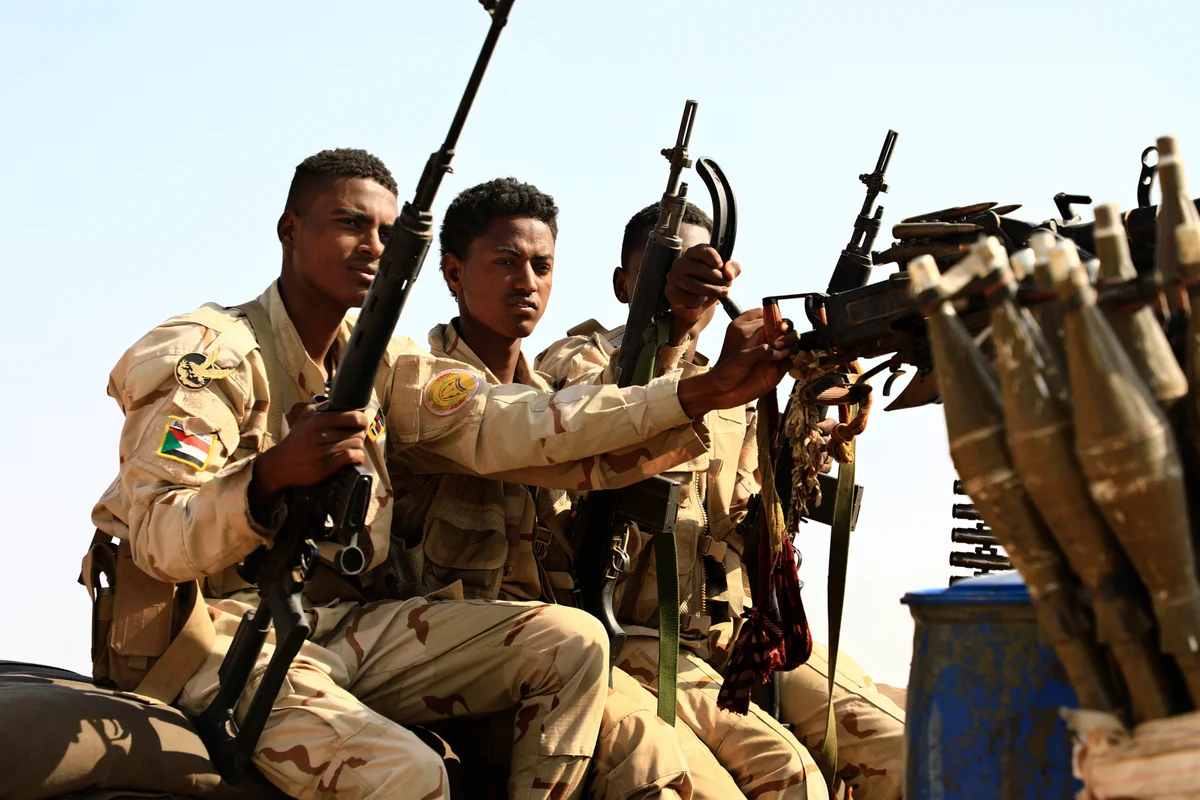
The measures target businesses and individuals linked to both the Sudanese Armed Forces and the paramilitary Rapid Support Forces (RSF)
The UK has imposed sanctions on 11 people and companies accused of profiting from Sudan’s illicit gold trade in a bid to cut off a key source of funding for the country’s civil war.
The measures target businesses and individuals linked to both the Sudanese Armed Forces (SAF) and the paramilitary Rapid Support Forces (RSF) the military factions fighting. It includes three state-owned mining companies and firms based in the United Arab Emirates and Hong Kong.
The Foreign, Commonwealth and Development Office (FCDO) said Sudan’s gold industry had become the engine of the war economy, with billions of dollars’ worth of gold smuggled out of the country every year to fund weapons purchases and military operations.
“The people of Sudan continue to pay the price for a war fuelled not only by guns and fighters, but by illicit flows of gold and finance to fill the war chests on both sides,” Foreign Secretary Yvette Cooper said. “These sanctions are targeting Sudan’s war economy and they will shine a light on those who seek to profit from these illegal shadow networks.”
Among those sanctioned is Abu Dharr Abdul Nabi Habiballa Ahmmed, who the UK describes as an RSF financier who used a network of companies in Dubai to fund the paramilitary group. UAE-based firms allegedly involved in RSF procurement are also included, and three Sudanese state-owned mining companies accused of generating gold revenues for the SAF.
Official exports were worth $1.5bn in 2024 and 2025, the UK said, but the true value of the trade was several times higher because billions of dollars’ worth of gold is smuggled out of the country each year through illicit channels.
It comes as the UK has also warned that the strategic city of El Obeid was at risk of becoming “another El Fasher” and called for the United Nations arms embargo on Sudan to be extended beyond Darfur.
El Obeid, the capital of North Kordofan state, has endured months of siege and humanitarian hardship. Advancing RSF are encircling the city, cutting off supply routes while launching repeated drone attacks on fuel, infrastructure and storage sites. An estimated 500,000 civilians are at risk.
Ms Cooper said in a parliamentary debate earlier this month that she had raised El Obeid with allies at the recent NATO summit in Ankara, adding that she is “deeply fearful that the Sudanese city is at risk of mass bloodshed and civilian casualties”.
“Last year, El Fasher became the site of unspeakable violence and suffering, atrocities that the UN’s fact-finding mission concluded bore the hallmarks of genocide. The world must not fail the people of Sudan again.,” she said.
This article has been produced as part of The Independent’s Rethinking Global Aid project
Join thought-provoking conversations, follow other Independent readers and see their replies