

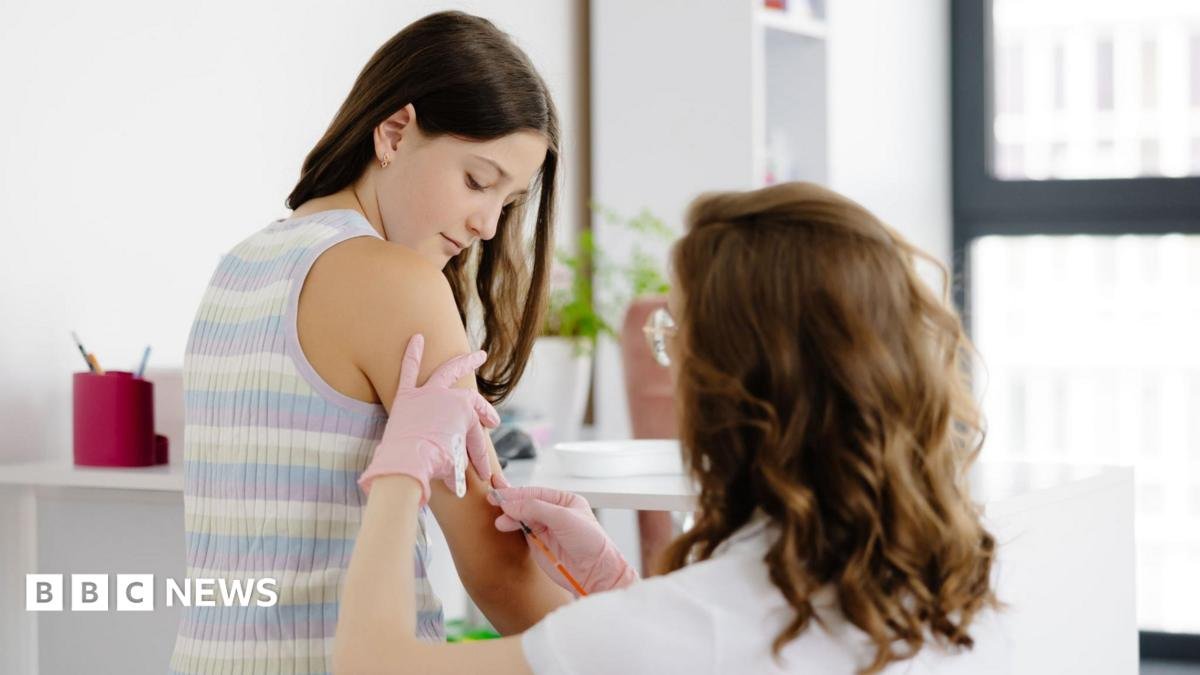
A Meningitis B vaccination programme targeting young people and university students in Northern Ireland will roll out from 31 July, NI’s chief medical officer has said.
It follows an outbreak in England earlier this year, in which two people – a university student and a sixth-form pupil – died.
The two-dose vaccine will be offered to those deemed most at risk from the infection, including Year 14 students and under-25s starting university or a Higher Education institution for the first time this autumn.
Meningitis B (MenB) is a bacterial infection that can cause serious, life-threatening illness including inflammation of the lining of the brain and blood poisoning (sepsis).
It is spread by close contact such as kissing, sharing vapes or drinks, or living in close quarters – like student accommodation – with a person who has the disease.
Similar vaccination programmes are rolling out in England, Wales and Scotland.
What is meningitis B and why is a vaccine only being offered to some teenagers?
Published12 JuneMeningitis B vaccine to be offered to a million young people
Published12 JuneWhat is meningitis B?Meningitis is an infection of the protective membranes that surround the brain and spinal cord.
There are several types, and meningitis B can be very serious.
It can affect anyone, but is most common in babies, young children, teenagers and young adults.
A letter from the Chief Medical Officer, external, Prof Sir Michael McBride, states that from 31 July 2026, those eligible for the vaccine are:
Anyone born between 2 July 2007 and 1 July 2008
Those born on or after 21 July 2001 and are due to start an undergraduate degree in the UK or Ireland this autumn – including international students
Individuals born on or after 21 July 2001 and living in further education or university halls for the first time this autumn
Any pupil not in Year 14 in the 2025/2026 academic school year, postgraduate students and other students not going to university for the first time this autumn are excluded from the meningococcal B (MenB) vaccination programme.
The vaccine is given in two doses, about 28 days apart, to be most effective.
People are encouraged to get both doses before starting university.
One reason why students are most at risk from meningitis is because when they go to university, they come into close contact with lots of people they have never met before.
They mix in large numbers at close quarters, while sharing kitchens, accommodation and going on nights out.
However, UK health experts have now called for all teenagers from the age of 15 to be given the free MenB vaccine during this one-off campaign.
The government had previously said following the Kent outbreak, when there was a rush to get the vaccine privately for teenagers, there was no need.
However, the advice from the Joint Committee on Vaccination and Immunisation (JCVI), has now changed in recognition of teenagers being more likely to catch it and become ill.
In a statement to BBC News NI, the Department of Health said officials are now working to “determine if this can be rolled out in Northern Ireland”.
“The minister will consider the recent recommendations and make a policy decision in due course,” it added.
Older adults can still be affected by meningitis, particularly if they have weakened immune systems but the most at-risk groups are young people and babies.
The first doses will be offered until 31 December 2026, and second doses will be offered until 31 March 2027.
This is to allow those arriving late or international students to avail of both doses before beginning their studies.
The Public Health Agency (PHA) and the Department of Health have yet to provide details of where, when or how people can get the MenB vaccine.
However, the chief medical officer said a “mixed delivery model” will be used to distribute the vaccines, including GPs and community pharmacies.
Trusts are also “expected to set up some vaccination clinics on campuses”, according to McBride.
What are the symptoms of meningitis and how is it spread?
I went to bed with a sore ear, meningitis put me in a coma