

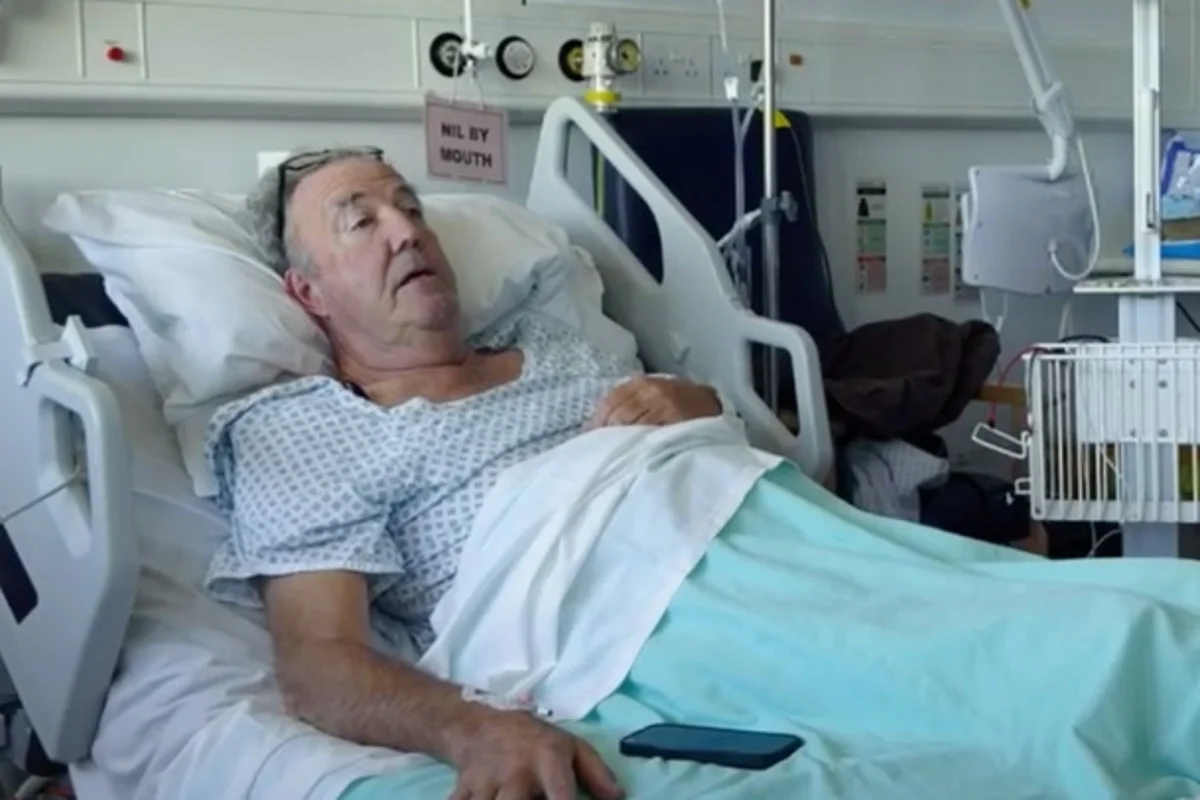
The UK Government recently announced that extra funding would go towards expanding the provision of focal therapy
A new study has revealed that a minimally-invasive treatment for prostate cancer used by Jeremy Clarkson and Lord David Cameron offers comparable effectiveness to traditional radiotherapy and prostatectomy surgery, but with significantly fewer side effects.
This innovative approach, known as focal therapy, specifically targets and destroys only the cancerous tissue within the prostate, proving highly effective in achieving positive long-term results for patients.
Research from Imperial College London and Imperial College Healthcare Trust, published in the journal European Urology, underscored the treatment’s success: a mere two out of nearly 3,500 men died from prostate cancer a decade after undergoing focal therapy.
Former Top Gear presenter Clarkson and former prime minister Lord Cameron both chose the treatment after being diagnosed with prostate cancer.
Study author Dr Alexander Light, NIHR doctoral fellow at Imperial College London and urology registrar at Imperial College Healthcare NHS Trust, said: “The results of our study are really encouraging.
“Ten years on, only two men in the study had died from their prostate cancer and many men have benefitted from the treatment, including men with more aggressive disease who would traditionally have been told focal therapy wasn’t an option for them.”
According to the NHS, more than 60,000 cases of prostate cancer are diagnosed each year in the UK, making it the most common form of cancer in men.
While robotic surgery to remove the prostate (radical prostatectomy) and radiotherapy are effective treatments, both can cause long-lasting side effects including urinary incontinence and erectile dysfunction.
Between 50-66 per cent of cancers localised to the prostate would be suitable for focal therapy – around 15,000 cases in the UK each year.
Focal therapy leads to a five-fold lower risk of side effects such as incontinence, erectile dysfunction and rectal problems compared to traditional radiotherapy or surgery because it only targets the areas of cancer.
A decade after receiving focal therapy, two men across the study of 3,477 participants had died from their prostate cancer and three in 100 had seen their cancer spread outside the prostate. Both rates are similar to those seen with surgery or radiotherapy.
Last month, the UK Government announced extra funding would go towards expanding the provision of focal therapy.
Joint senior author Professor Hashim Ahmed, consultant urologist and chair of urology at Imperial College London and Imperial College Healthcare NHS Trust said: “This is the largest and longest-running study demonstrating that focal therapy delivers excellent long-term cancer control across a broad range of patients.
“It makes a compelling case for more centres to offer this treatment, and I am pleased to see the government make a firm commitment of capital funding to support it.
“Right now, only about 1,000 men per year have the treatment, when up to 15,000 men could – and are either not told about it, or do not have local access.”
Join thought-provoking conversations, follow other Independent readers and see their replies