

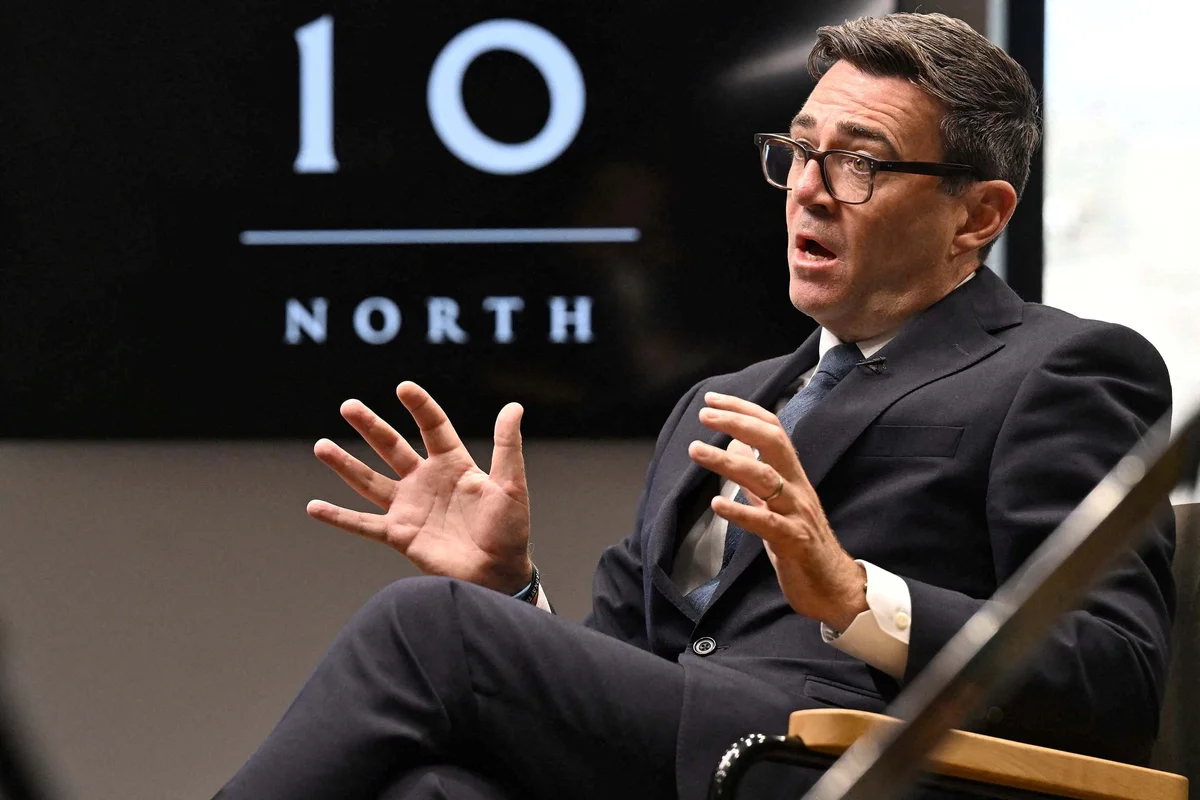
As Andy Burnham admits he is preparing to make some benefits ‘conditional’, political editor David Maddox looks at the politics of the Labour Party and when the new PM is taking a big but necessary risk
There is nothing like prime ministers attempting to repeat the mistakes of their predecessors to stir up the political firmament.
But it appears that just a week into his premiership, Andy Burnham is willing to take that risk.
In the great debate over what was the nail in the coffin for Keir Starmer’s two-year premiership, there are a number of candidates.
Included in the roll of dishonour are the gifts from Lord Alli, poor polling, taking away winter fuel payments for pensioners, and appointing Peter Mandelson , a known-friend of convicted paedophile Jeffrey Epstein.
But in truth what really did for Sir Keir Starmer happened a year ago, when a massive backbench rebellion forced him to back down on taking £5bn a year off the burgeoning welfare bill and cut benefits.
When Sir Keir finally had to admit defeat just before the summer recess of 2025, he in that moment lost his authority as a party leader and prime minister. Worse, he lost control of the political agenda and the finances of the country.
At a time when international events like the war in Ukraine and turbulence in the Middle East made matters even worse, the UK’s already high debt and a failure to generate economic growth left his government with no room for manoeuvre.
Added to that, he became a prisoner of his own backbenchers, forced to spend even more on welfare by lifting the two child benefit cap.
It was no coincidence that the left-wing MPs at the heart of that welfare rebellion were also the leading cheerleaders for Andy Burnham to sweep in via the Makerfield by-election to replace Sir Keir this month.
And yet, despite the humiliation to his predecessor, Mr Burnham has used his first major interview with the BBC’s Laura Kuenssberg to signal that he wants another go at bringing down welfare.
So why does he think he can succeed where Sir Keir so spectacularly failed?
You have to hope for the sake of the sanity of the Labour MPs that Mr Burnham is not going to just rely on the cheery chappy from the north routine to get this through.
Videos about blind tasting with pub snacks or showing off his personal art collection in the Number 10 of the North may generate a number of likes and make Labour MPs feel a bit happier about themselves, but it will not replace substantial arguments on policy or deal with the letters, emails and social media posts from constituents who will lose out on benefits.
We should have seen Mr Burnham’s intent when he kept on Pat McFadden as welfare secretary rather than sack him with the 11 other Starmerites removed from the cabinet with brutal efficiency.
In a now infamous text to Peter Mandelson, Mr McFadden dismissed the welfare Labour MP rebels: “Every meeting I have is ‘who can we tax in order to pay benefits to others?’ They’re asking the wrong questions.”
If we look carefully at what Mr Burnham is now saying to Ms Kuenssberg, it is clear he plans to be tough.
He said: “What you’re driving at, which is the welfare bill. I think we’ve got to get really serious as a country at getting the welfare down.”
And we know how he will do it, making welfare conditional on work.
“It’s about changing the nature of the support and making some of the support conditional upon people taking opportunities that are presented in front of them. So you might increase the conditions required to receive benefits. I think it’s a good thing that the government has given guarantees of opportunities for young people.”
There are important differences though. Mr Burnham is not putting a figure on the savings, a mistake made by Sir Keir, his chancellor Rachel Reeves and his then-welfare secretary Liz Kendall when they identified £5bn.
By doing that, the previous government made the argument about money, not what is best for claimants.
And in that vain, Mr Burnham is going out of his way to insist that it is society who is failing claimants not claimants themselves being to blame.
In the end though the political and economic realities are the same. The welfare bill has to come down dramatically if the country is to fund the issues like fixing social care, ending rough sleeping, boosting defence spending, business rates cuts for pubs, £2 bus fare caps, VAT cuts for energy bills and whatever next policy Mr Burnham announces.
The one big thing Mr Burnham now has on his side is that it will be very difficult for Labour to replace another leader before the next election. Their systems are much more difficult than the Tories and we all know what happened to the Tories after multiple changes.
So maybe with the right language and some good early vibes, Mr Burnham will be able to make the unpopular tough decisions on welfare that are necessary.
But you still would not bet against a rebellion on the issue possibly with Sir Keir ruthfully chuckling in the background.
Join thought-provoking conversations, follow other Independent readers and see their replies