

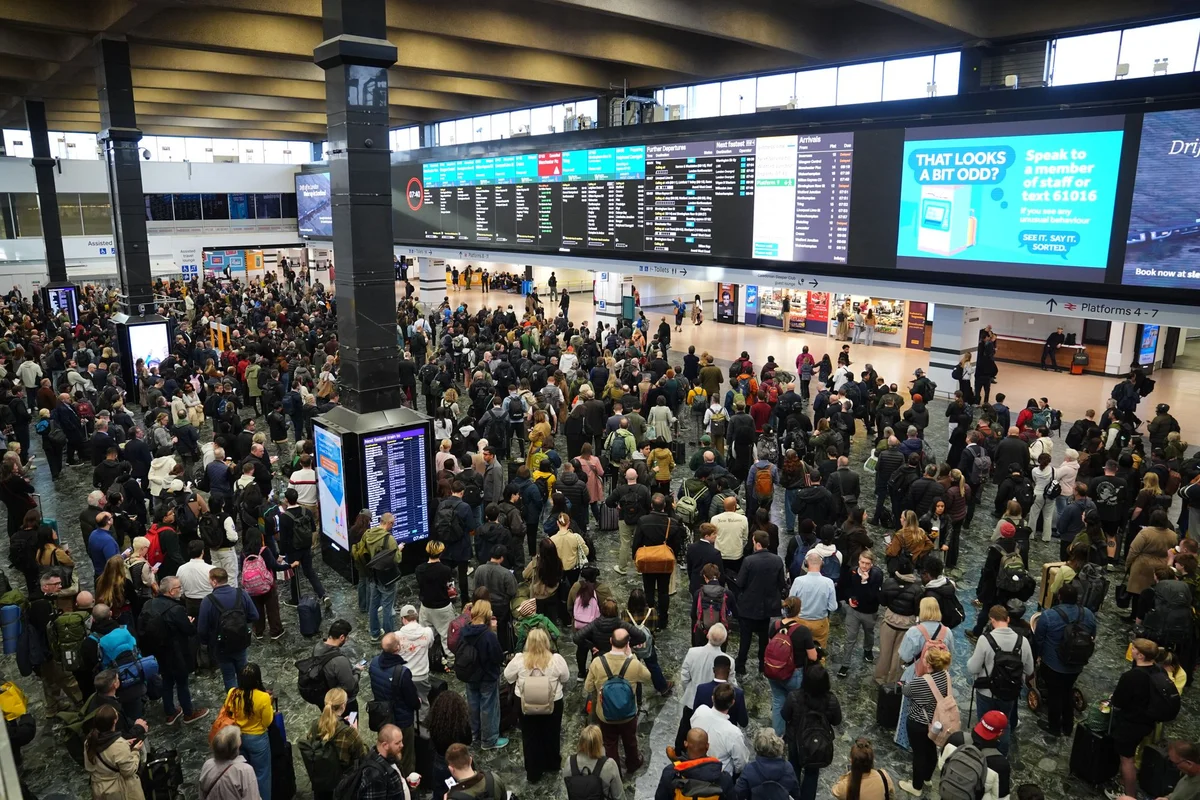
One Thameslink service topped the list at 176 per cent capacity at London St Pancras just after 8am
Jam-packed commuter trains are expected when making the morning journey into central London – but now a quarter of passengers are forced to stand during peak hours.
Trains heading through Euston and St Pancras International can be so busy the carriages are at more than 170 per cent capacity, according to new data released by the Department of Transport (DfT).
Last autumn the most overcrowded trains in England and Wales were a Thameslink morning rush-hour service between Bedford and Three Bridges in West Sussex, and a West Midlands service from London Euston to Crewe in Cheshire, departing during the evening rush hour.
Across England and Wales, one in five passengers (20 per cent) were standing during peak hours on a typical autumn weekday in 2025 across all major cities. But this rose to one in four passengers in London.
Despite this, on average services into major cities in England and Wales were just 29 per cent full. Across both morning and evening rush hours, the average load rose to 53 per cent.
One Thameslink service topped the list at 176 per cent capacity at London St Pancras just after 8am.
The second busiest train, the West Midlands service to Crewe, was 170 per cent full and was at its busiest when it departed Euston.
The third most crowded train was outside London, a Transport for Wales service from Bridgend to Rhymney, which was 161 per cent full. This service was at its busiest when it stopped at Llanishen.
Also in the top 10 most crowded services were the South Western service from Fareham to London Waterloo, the Thameslink service from Epsom to London Bridge, and the South Western service from Portsmouth Harbour to London Waterloo.
The DfT has said it is currently working on improving capacity where there are pinch points during peak hours.
A spokesperson said: “The vast majority of passengers – 98.9 per cent – typically travel on services that are not overcrowded.
“Where there are pinch points during peak hours, work is underway to improve capacity. GTR has added carriages to its busiest commuter services, while South Western Railway has boosted capacity by nearly 30 per cent in the last year with new trains.
“Timetable changes are also being introduced across the network, with nationalised operators adding 76,000 extra seats per week.
“Bringing track and train together under Great British Railways will support further improvements, helping create a joined-up service that puts passengers first.”
Join thought-provoking conversations, follow other Independent readers and see their replies