

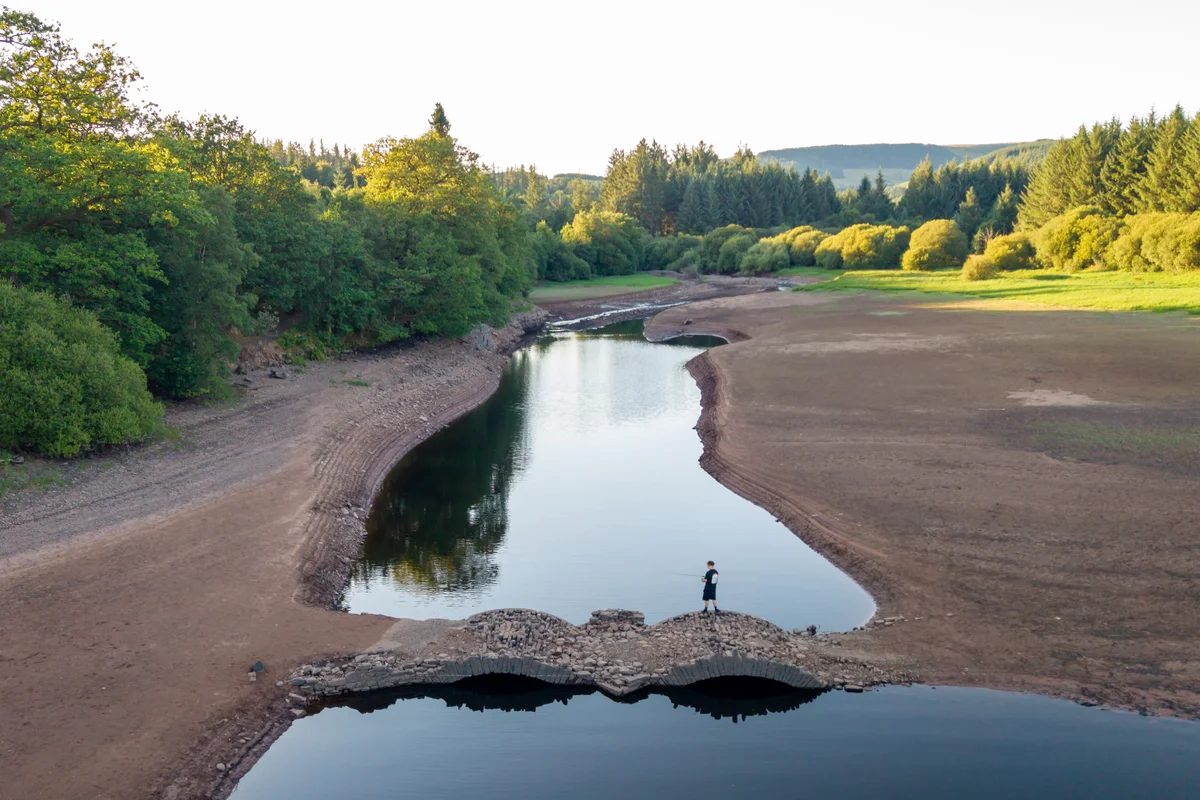
Before and after images reveal the impact of the dry, hot conditions
An estimated 30 million people across the UK have been plunged into drought conditions as extreme heat, low rainfall and dry conditions continue.
Half of England and the entirety of Wales are now in an official drought, authorities for the two nations have confirmed. Wildfires continue to rage in multiple areas, while millions remain subject to a hosepipe ban.
Photos from across the UK show the scale of the damage to the natural environment caused by the dry weather.
Reservoirs and rivers in England have begun to show signs of depletion, with the rare sight of beds becoming visible as water levels sink.
Meanwhile, agricultural land, forests and fields have begun to turn brown in the heat. Farmers have reported poorer yields as a result of the weather, with livestock farmers forced to use winter feed as a result of low grass growth.
Farmers are calling for efforts to make agriculture more resilient to climate change, including making it easier to build on-farm reservoirs and flexible abstraction licences so farmers can take and store water when it rains.
July is set to be England’s driest month on record, with the Environment Agency terming the conditions as a “flash drought”.
The country is expected to see just seven per cent of its expected rainfall this month, while Wales – where all regions are in drought – is expected to see only eight per cent.
Before and after photos show the impact of the conditions on green spaces across the UK.
It is the second consecutive summer drought, and the third in four years after the one seen in 2022.
Helen Wakeham, director of water at the Environment Agency and chair of the National Drought Group, said: “The hot and dry weather means we are currently using water faster than nature can replenish it.
“A second consecutive summer drought is an exceptionally serious situation and one that will have long-lasting impacts on our environment, wildlife and the economy.
“We want everyone to stay safe and hydrated during the hot weather but every drop we can save is a drop more for nature and agriculture.”
Wednesday marked the seventh day that temperatures reached 35C in the UK, hitting 35C in Essex. Before 2026, the record for this was just five days, set in 1976 and matched in 2020.
Both May and June recorded new temperature highs for that time of year.
The conditions are also impacting public health, with the UK Health Security Agency (UKHSA) warning that it “is likely that 2026 could see the highest number of heat-associated deaths on record”.
Data reveals that there have been nearly double the number of excess deaths caused by heatwaves this year than all of last summer. The UKHSA estimates that there were 2,877 heat-associated deaths during the heatwaves in May and June this year.
Experts have also warned that respite from the dry conditions may not come until autumn.
Met Office chief meteorologist Will Lang said: “While there is always the potential for periods of rain during the remainder of the summer, current forecasts do not favour the widespread, sustained rainfall that would be needed to make a significant difference to rainfall deficits that have built up over recent months.
“As we move through August, there remains a tendency towards drier than average conditions, particularly in southern and eastern areas.
“Meaningful recovery from prolonged dry conditions often relies on more frequent and widespread rainfall during the autumn months, when weather patterns typically become more changeable.”
Join thought-provoking conversations, follow other Independent readers and see their replies