

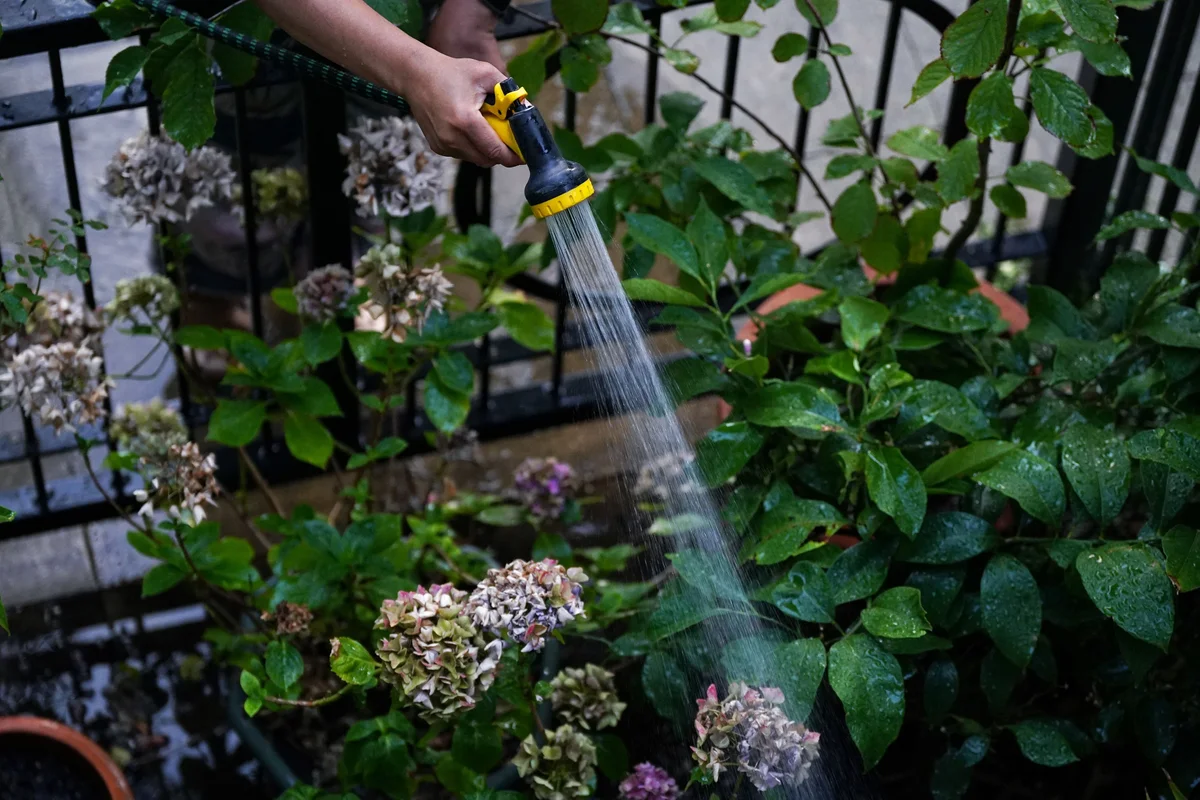
Around 10 per cent of householders said they would report a neighbour using a hose in their garden while a ban was in place
More than one in ten households currently under a hosepipe ban have no intention of adhering to the restrictions, a new survey has revealed.
The YouGov poll, commissioned by the Press Association and surveying over 4,200 adults, found that 11 per cent of households stated they would not fully abide by the ban, with an additional 5 per cent still undecided.
The findings come as seven water companies – Affinity Water, Anglian Water, Cambridge Water, Southern Water, South East Water, Thames Water, and South West Water – have implemented “Temporary Use Bans”.
These measures impact 23 million customers, representing approximately 40 per cent of England’s population.
Public opinion on the bans remains divided, with just under half of households (49 per cent) expressing support for the restrictions in their local area, while 35 per cent voiced opposition. A significant number of those against the bans believe that customers on water meters should be exempt, arguing they should be able to use as much water as they pay for.
Meanwhile, only 10 per cent of householders indicated they would report a neighbour for using a hosepipe during a ban, compared to 71 per cent who would not, with the remainder unsure.
Other reasons given for ignoring a ban were concerns about fruit and vegetables going to waste because they were too difficult to water with a watering can, and to support wildlife in the garden.
Households subject to a ban can use a watering can, and using a hosepipe is still allowed to water food crops at home or on an allotment when using a watering can is not practical.
A drip irrigation system for a garden is also allowed as long as it is fitted with a timer and pressure-reducing valve and delivers water directly to the soil rather than spraying it into the air.
The ban does extend to using a hosepipe to clean a car or fill a paddling pool or domestic swimming pool.
Other householders raised concerns about their water supplier’s wider performance, with one saying: “I pay an extortionate amount for my water. It is not my problem that water companies would rather give their CEOs ridiculous amounts of money instead of building new reservoirs.”
Another said: “How does a first world nation not have the infrastructure to support no rain for a month?”
The bans come as almost a third of England – including parts of the South East, Midlands and North West – languish in “prolonged dry weather” status, with only the North East and Yorkshire still seeing “normal” conditions for the time of year.
Last week, the Environment Agency declared seven areas of central, eastern and southern England – around half of the country – as officially in drought as a result of very low rainfall and high temperatures.
Last year, Yorkshire Water reported savings of up to 10% in household consumption when their hosepipe ban was in place, while Anglian Water has reported a 9% reduction in demand since its ban was implemented last month.
A Water UK spokeswoman said: “We are incredibly grateful to customers for doing their bit to protect our environment and preserve our water supplies.
“Some parts of the country have seen demand for water rise by more than a third.
“Water companies are working round the clock fixing leaks, moving water across regions and running treatment works flat out to keep supplies flowing, and we urge all customers to use water wisely.”
An Environment Agency spokeswoman said: “A hosepipe can use 1,000 litres an hour – which is more than a family-of-four will use in a day.
“These short-term bans allow companies to conserve their supplies as we don’t know when this drought will end.
“We are grateful to people for following the restrictions, where in place. The less water we use, the more stays in the local environment, which is vital for the health of our rivers and wildlife.”
Consumer Council for Water chief executive Mike Keil said: “We know hosepipe restrictions are frustrating for some people, but water companies have a duty to act when sustained hot, dry weather and increased demand for water threaten both the environment and the security of water supplies needed for essential use.
“However, asking customers to play their part means water companies must be playing theirs too. Water saving is a shared responsibility and when customers see their water company failing to get a grip on leakage, it understandably drains their own motivation to save water.”
Join thought-provoking conversations, follow other Independent readers and see their replies