

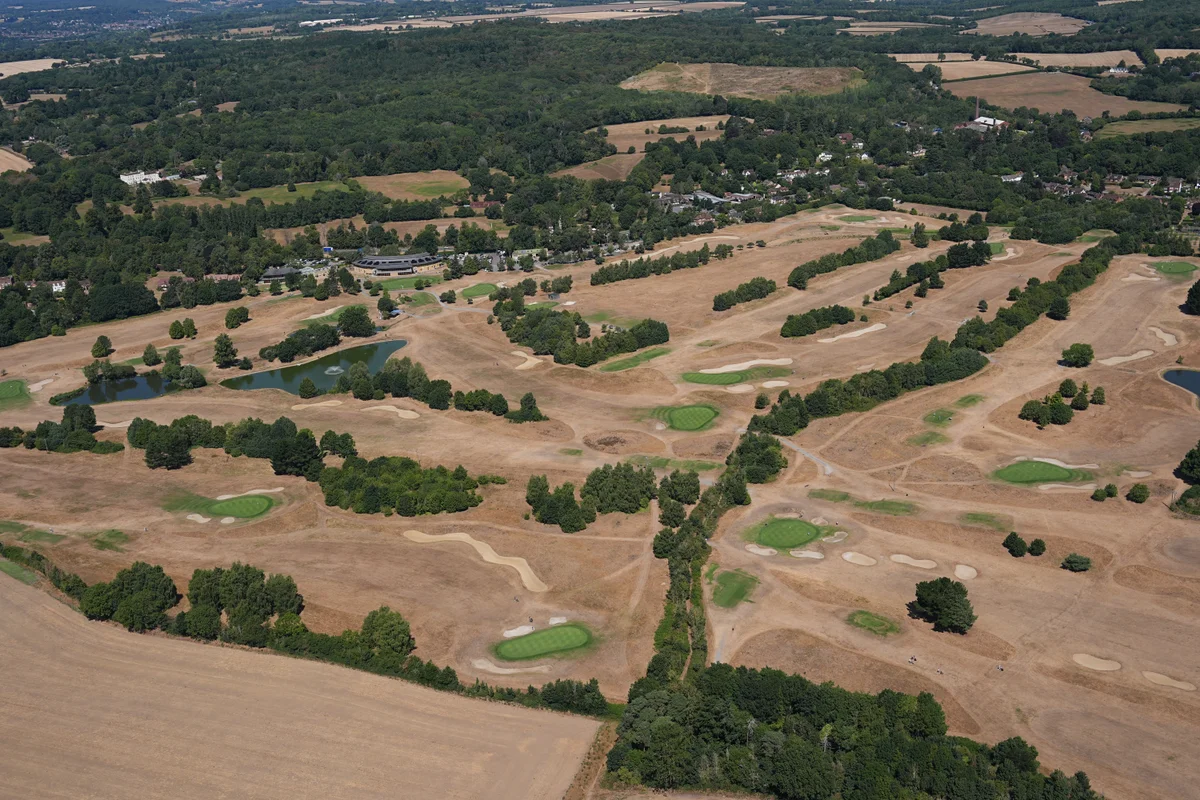
The exceptionally hot, dry spring and summer could cut the country’s cereals and oilseed harvest by 2.5 million tonnes
British farmers are facing a “completely brutal” year, with analysis suggesting the 2026 harvest could be the worst on record due to extreme summer weather.
The Energy and Climate Intelligence Unit (ECIU) estimates that the exceptionally hot and dry spring and summer conditions have slashed the country’s cereals and oilseed harvest by 2.5 million tonnes compared to earlier projections, potentially costing UK farmers up to £390 million.
This stark outlook contrasts sharply with forecasts made in March and April by European and US agricultural bodies, which had indicated that UK yields for 2026 were on track to meet or even exceed 10-year averages.
However, the latest harvest data from the Agriculture and Horticulture Development Board (AHDB) now reveals significant drops in wheat, barley, and oat yields.
Wheat, which is approximately halfway through harvesting, is currently averaging 6.8 tonnes per hectare, a figure considerably below the decade-long average.
If the provisional yield estimates hold, the UK cereal and oilseeds harvest would be 19.5 million tonnes, overtaking 2020 as the worst on record since detailed records began in 1984, even after good yields for oilseed rape, ECIU said.
And even if things pick up, 2026 is likely to be one of the five worst harvests on record – four of which have occurred this decade, following extreme weather made more severe by climate change.
The UK is battling increasingly extreme weather fuelled by climate change, which is mostly caused by burning fossil fuels for power, to fuel cars, make industrial products and heat homes and buildings, along with agriculture and clearing forests.
This year, the UK has experienced record-breaking deadly heatwaves in May and June, followed by heatwaves and the driest July on record for England and Wales, plunging the whole of Wales and half of England into drought.
The extremely hot and dry summer comes after a dry spring – and is the second year in a row of extreme heat and drought, interspersed with extremely wet winters in what has been described as “weather whiplash”.
Martin Lines, chief executive of the Nature Friendly Farming Network (NFFN) and a farmer in Cambridgeshire, warned that there was “only so much you can do to adapt to these sort of extremes”.
He said the harvest this year had been “a real kick in the teeth”.
“After two terrible harvests in a row, the crops this year were looking good and full of potential coming out of spring, only for months of drought and heatwaves to destroy any prospect of a decent harvest,” he said.
“I’ve never known it this dry and hot on our farm.
“Even farmers I know who were sceptical of climate change are now saying they’re really worried about the future of their businesses and production, it’s just been completely brutal for our industry.”
And with high input costs because of the Iran war, he said planning crops for next year was “a total nightmare”.
“The nature-friendly practices we’ve deployed on the farm have helped our soils hold on to water for longer, but there’s only so much you can do to adapt to these sorts of extremes.”
Tom Lancaster, land, food and farming analyst at the ECIU think tank, said there was a danger of UK farming entering a “climate doom loop”, as the green and pleasant land transformed into a “parched and increasingly unproductive one” in the face of extreme conditions.
“At the start of spring farmers were hopeful of a better year, but the dry April and July and record-breaking heat have left farmers facing down the barrel of a third awful harvest in a row.
“Farming is now the sector most exposed to climate change and the risks and damage that it brings.
“From the wettest winter on record in 2024, to the hottest summer in 2025 and now unprecedented heat and drought this year, we are in danger of UK farming entering a climate doom loop, as repeated impacts undermine the capacity of farmers to drill next year’s crop,” he said.
Global temperatures will continue to rise until emissions of the greenhouse gases that are pushing them up are brought down to zero overall – known as net zero.
That means cutting emissions as much as possible by switching to technology such as wind and solar power, electric vehicles and heat pumps, and offsetting any remaining pollution by establishing forests, restoring peatland and potentially developing technology to capture carbon from the air.
Mr Lancaster warned: “Without reducing emissions to net zero, to bring the climate back into balance, conditions will continue to deteriorate.
“It is now a clear priority for the future of UK food production, farming and the countryside that sustains it.”
Join thought-provoking conversations, follow other Independent readers and see their replies