

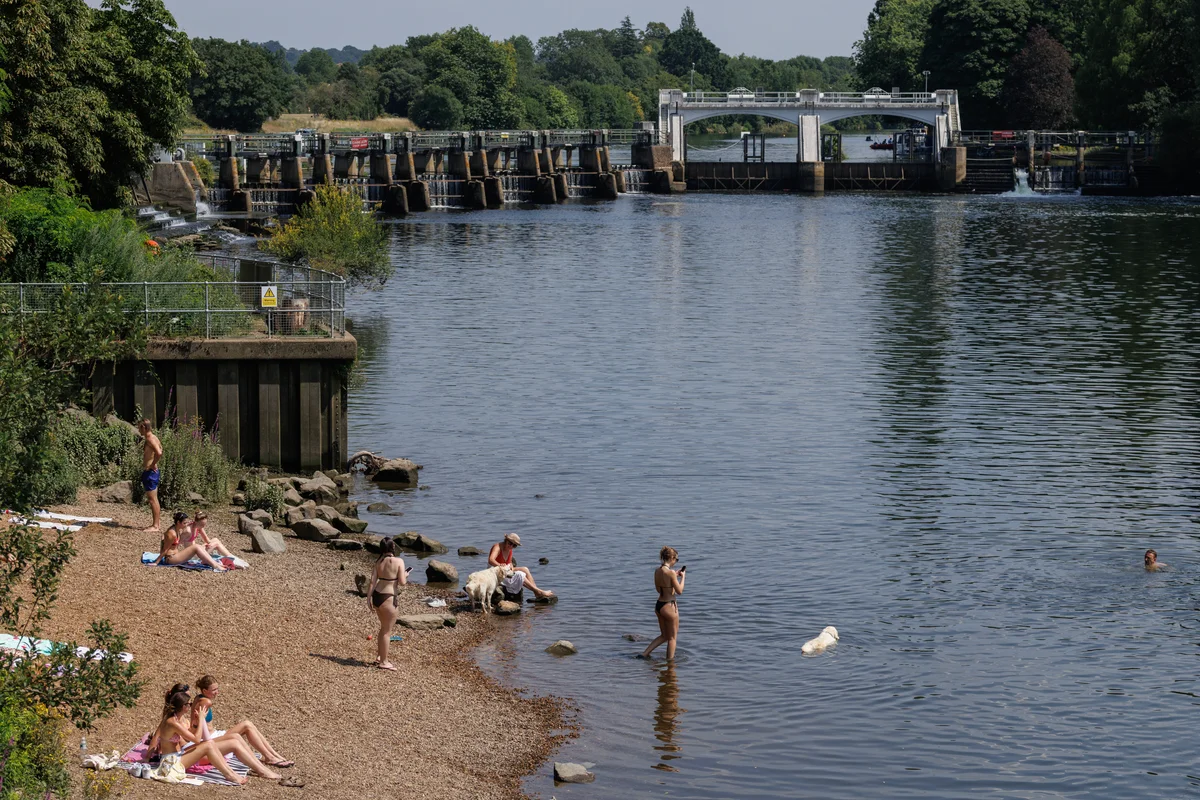
Just 14 per cent of England’s rivers, lakes, and coastal waters are in good ecological health
A stark new assessment has revealed that a mere 14 per cent of England’s rivers, lakes, and coastal waters are currently in good ecological health.
The findings come from the Environment Agency’s first update in six years, conducted under retained EU legislation governing water quality.
This comprehensive evaluation scrutinised 4,658 of the country’s rivers, lakes, estuaries, canals, and coastal waters, measuring their health against a range of standards including wildlife populations, overall water quality, and the condition of physical habitats.
The report indicates that just 14.3 per cent of surface water bodies achieved an overall good ecological status in 2025, with widespread issues attributed to sewage spills, agricultural nutrient runoff, and pollutants emanating from urban areas and roads, such as litter, petrol, and garden pesticides. Alarmingly, only 15 per cent of rivers meet or exceed good ecological status, according to the figures.
They also reveal England’s water bodies are falling far short of the Government target to restore 75% to good ecological status by 2027.
In response to the latest data campaigners warned “nothing has changed” despite repeated Government promises, and said England’s rivers were among the filthiest in Europe, poisoned by sewage and industrial-scale agriculture.
The 2025 figures are slightly down from the 16.3% achieving good status in the last assessment in 2019, although the Environment Agency said they were not directly comparable as it had updated its methods, used a wider set of data and focused on places it suspected had problems.
But the EA said the analysis showed that “too many water bodies are not achieving the standards we want to see” and it would use the data to direct action from companies, farmers, businesses and councils to improve the state of England’s waterways and lakes.
And every single surface water body continues to fail to meet a “good” chemical status, largely due to persistent chemicals in the environment including former flame retardants and “PFOS”- a former stain repellent and firefighting chemicals.
These substances are now banned or heavily restricted in the UK but break down very slowly and persist in the environment for decades.
The rules mean that classification of water bodies is done on a “one out, all out” so that if a river, lake or estuary fails to meet good status in one of the elements it is assessed on – from fish, invertebrate and plant life to phosphate, ammonia and oxygen levels – it will fail to meet good ecological status overall.
The data show more than four fifths (82%) of individual indicators were good or high status, which the EA described as “encouraging”.
The 2025 dataset shows two thirds (65.4%) of water bodies achieve moderate ecological status, while 17% are poor, 3.1% are bad and just 0.1% achieve high status.
The assessment also looks at groundwater and finds that 41% achieve good status, compared to 37% in 2019.
Chairman of the Environment Agency Alan Lovell said the Water Environment (Water Framework Directive) classifications helped officials understand where water bodies were improving and where further action was needed.
“The results show that too many water bodies are still not achieving the standards we want to see.
“We share the public’s ambition for faster progress which is why we are transforming our enforcement work with better data, stronger powers and our largest ever enforcement workforce.”
He added: “We are using all our evidence to direct sustained improvement action from water companies, farmers, businesses and councils.”
The agency pointed to improvements in phosphate levels in the River Roch to a “good” classification, following a catchment permit that required sewage treatment works upstream of the Manchester Ship Canal to remove more phosphate, improving the canal and other connected waters.
The EA also said it had stepped up its inspections of water company sites, and would be further increasing farm inspections from 4,000 to 6,000 a year over the next three years.
Environment Secretary Angela Eagle said the results underlined the need for “wholesale change” across the water sector.
“Our local communities deserve to have clean local rivers and lakes,” she said.
“We’ve already introduced landmark legislation to hold water companies to account, secured record investment to help fix infrastructure, and are laser focused on long term reforms that will prevent future failures.
“We will drive forward a system that puts the public interest first with higher standards, better performance and cleaner waterways.”
But chief executive of environmental charity River Action James Wallace said, “Despite successive Governments’ promises, nothing has changed.
“Our rivers remain among the filthiest in Europe, poisoned by sewage from polluting, profit-driven water companies and by industrial-scale agriculture, including chicken manure runoff from intensive poultry units that rear tens of millions of birds for fast-food chains and supermarkets.”
And he said: “If the Government is serious about restoring our rivers, it must use the upcoming Clean Water Bill to take back control of water companies from private profiteers and ensure they are owned and operated for public benefit, environmental protection and public health.
“It must also tackle agricultural pollution with the same urgency, holding the biggest polluters to account, supporting the transition to nature-friendly agriculture and ending the regulatory failures that have allowed our rivers to become open sewers.”
A spokesperson for industry body Water UK said: “As the Environment Agency has made clear, the health of rivers, lakes and waterways is shaped by many different factors, including agricultural nutrients and urban and transport run-off, as well as sewage.
“Water companies are investing a record £22 billion in environmental improvements by 2030.
“This will be the largest amount of money ever spent on the natural environment, and will help to secure our water supplies, support economic growth and end sewage entering our rivers and seas.”
Join thought-provoking conversations, follow other Independent readers and see their replies