

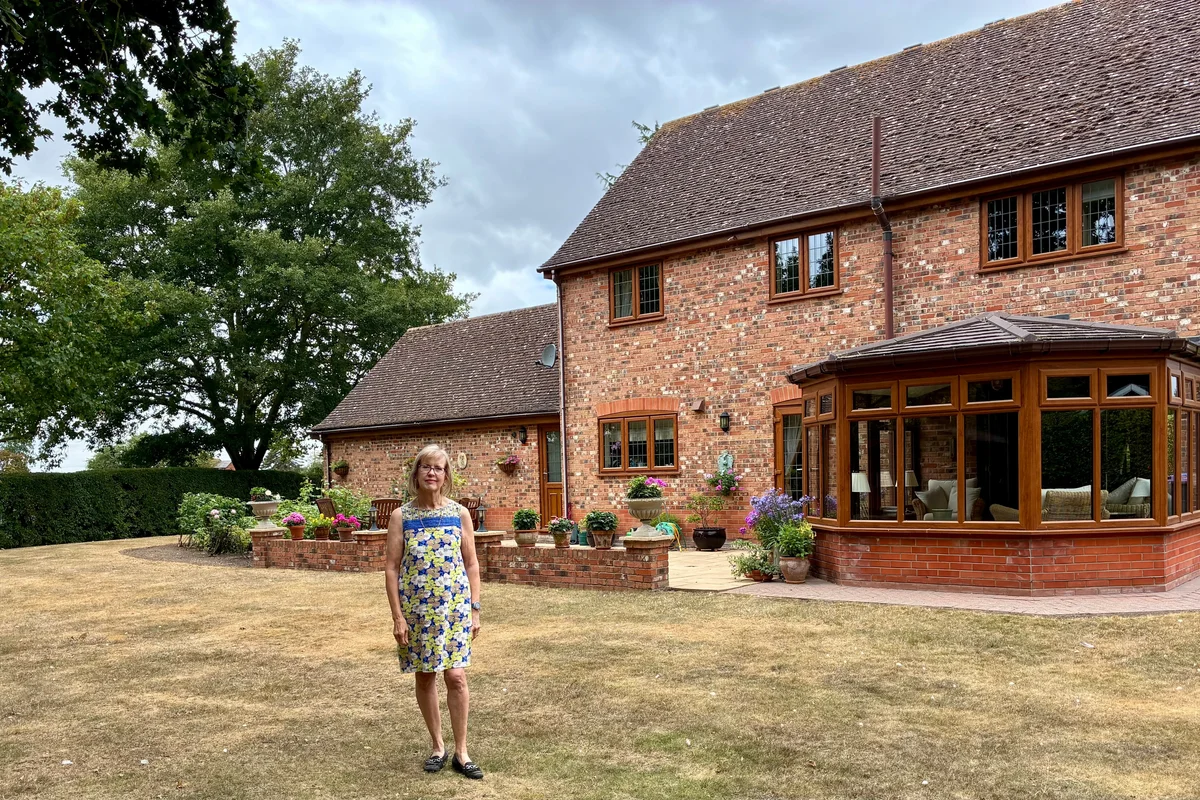
As England and Wales saw the hottest spring on record, many homeowners are suddenly finding their homes vulnerable to subsidence – with a soaring number set to be hit
“I spotted a crack in the concrete of our garage floor,” retired mortgage advisor Kaye Brown. “It then led to a frightening ordeal neither I or my husband had envisaged at our wonderful home.”
Thirty years after moving into their new four-bedroom home in Lincolnshire countryside, the couple had never contemplated subsidence.
But during last summer’s heatwaves, after spotting the crack, Mrs Brown noticed other issues – like the garage doors stiffening up and splits in the brickwork including our back utility room.
“We realised we had subsidence,” Mrs Brown said. “And being a former mortagage advisor, I realised it was a blight on the house that was now unsellable. And then there was that deep worry ‘is the whole house going to go?”
Mrs Brown‘s insurance company has stepped in. Checks were done on the foundations and drains, as well as a soil survey. The couple are now waiting on the results of a year-long test on how much the property has moved over the time, before repair works can begin on the £500,000 home.
“It takes years to sort out, and during this time you realise the house is worthless as no-one will buy it,” she said.
The pair are not alone. Hundreds of people claimed for subsidence to their homes between April and June this year, with the Association of British Insurers (ABI) reporting a £72m payout in successful claims. The average payout hit a new record high of £20,000 – up £2,000 from the same period last year.
A huge factor in the problem, experts have told The Independent, is the hot weather brought on by climate change, with the heat drying up clay soil and causing the ground to shift underneath homes. Trees and shrubs can also contribute as they draw water from the ground.
Latest research by the British Geographical Survey (BGS), based on data from the Met Office, projects up to 11 per cent of properties – some 1.8m homes – in Britain will be highly likely of being affected by subsidence by 2070. The worst-hit areas include northern and central boroughs of London, as well as Kent.
Mrs Brown, 62, who has already seen her insurance premium go up by 160 per cent this year, said: “When you think how climate change could impact you, you think floods and rising sea levels – I never thought it’d be subsidence in my home.”
Subsidence occurs when the soil sinks or shifts downward. It can affect properties, leading to cracks, tilting and – in worst case scenarios – structural failure.
According to the British Geological Survey, when soils containing clay minerals dry out, they lose water and shrink.
As well as the hot weather leading to shrinkage, subsidence can also be caused by trees, which compete for moisture, drainage and mining.
Measures to fix it include the removal of trees, repairing of drains and repairs to brickwork. In a few cases, “under-pinning” work to strengthen or deepen building foundations is required.
Homeowners should contact their insurance provider as soon as possible if they notice signs of subsidence. Early intervention is often the most effective way to minimise disruption and reduce costs.