

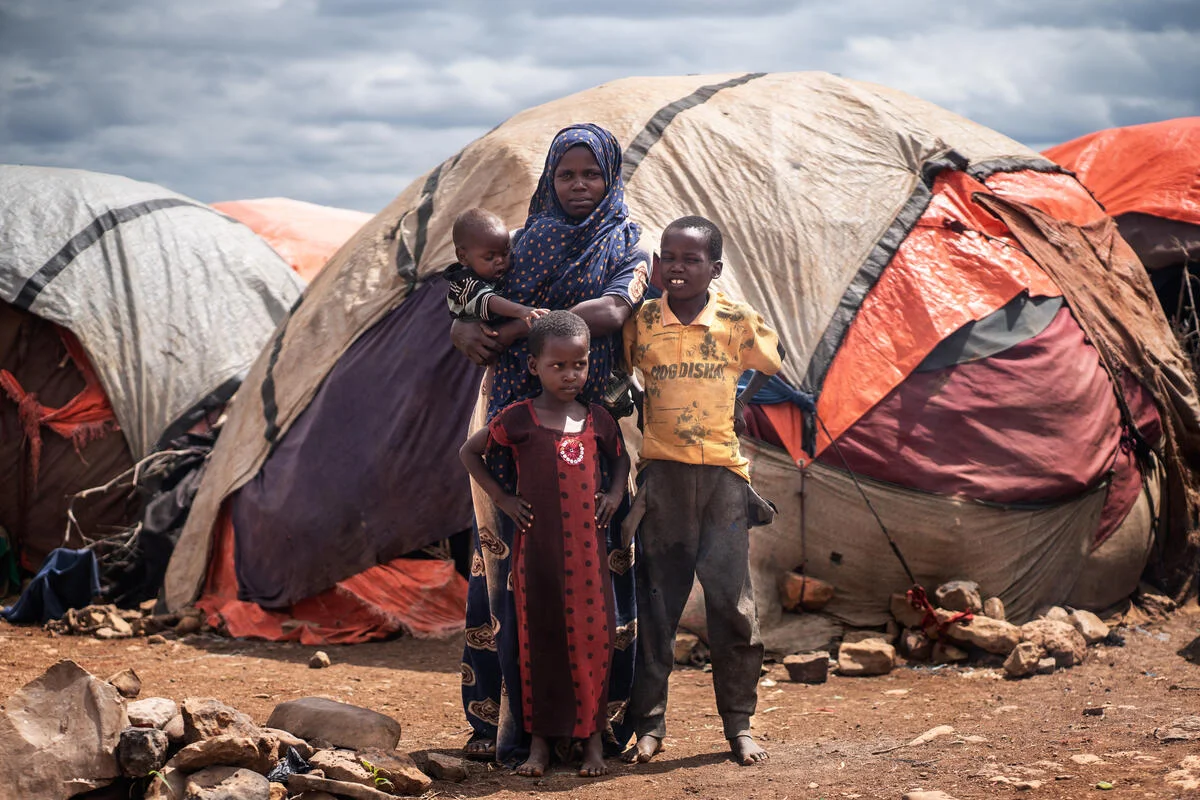
Exclusive: Data from UNICEF suggests climate risks faced by children are being overlooked by UK aid – as the UN agency prepares to launch a major campaign calling for children to be better prioritised by the Foreign Office
Aid cuts mean children around the world who facing some of the biggest climate challenges are falling “through the cracks” of the UK’s development agenda, the UN has warned.
A new analysis from the UN agency for children (UNICEF) plots cuts to UK aid programmes against scores recorded in UNICEF’s recently-updated Global Child Hazard Database, which tracks how the world’s 1.1 billion children are exposed to climate threats – including droughts, extreme heat, cyclones, and floods – in different locations.
The analysis, exclusively with The Independent, shows that Mozambique, Sierra Leone, Bangladesh, Nigeria and Pakistan are all set to see UK aid cuts of 49 per cent or above over the next three years, at the same time as over 59 per cent of children in these countries are exposed to three or more climate hazards.
Meanwhile, among the 28 countries facing UK aid cuts worth 30 per cent or more, 23 countries will see more than 50 per cent of children exposed to droughts and 12 countries will see more than 50 per cent of children exposed to extreme heat: two climate risks seen as particularly severe for developing countries in Africa.
The new findings come as UNICEF prepares to launch a new campaign in September making the case that children should be a priority for UK aid efforts going forward. While fragile and conflict-affected countries, as well as women and girls, are regularly cited by ministers as key priorities in the UK’s development agenda, children are not normally cited as a distinct focus.
“Many children most at risk from climate impacts are falling through the cracks of the UK’s development agenda, because they’re not considered a priority under the decision to prioritise fragile and conflict-affected countries,” said Débora Leão, senior policy advisor at UNICEF UK.
“But climate is creating compounding risks in many developing countries,” she continued. “A drought can put huge pressure on health systems by increasing malnutrition in children, or causing diseases to spread more rapidly. This can then be followed by a cyclone or a flood, further compounding challenges and leaving children with less and less ability to cope.”
Najib Bajali, also from UNICEF UK, added that it “remains hard to understand the rationale that the Foreign Office has followed” – and particularly so given that “climate is a key driver of conflict”.
The UK aid cut allocations, which saw the value of bilateral aid to nine African countries slashed by more than 80 per cent, have been widely criticised by development charities and MPs for the negative impact that they are set to have on livelihoods.
There is also particular concern from aid agencies around the impact of climate extremes over the next 18 months due to the “super” El Niño: An ongoing climate event being driven by unusually warm temperatures in the Pacific.
The El Niño is set to bring particularly severe rainfall to Tanzania, Kenya, Ethiopia and Somalia, while Malawi, Mozambique, Zimbabwe, and Madagascar are set to experience intense droughts.
One of the countries facing the most severe climate risks in Africa is Nigeria, which is set to see its aid from the UK decline by 50 per cent.
The UNICEF Global Hazards database shows nearly 89 million children in Nigeria are exposed to three or more climate hazards, while around 100.8 million are exposed to extreme heat, 95.4 million to heatwaves and 111.6 million to drought.
In practical terms, that means millions of children are growing up with overlapping risks to their health, nutrition, water, education and safety, while Nigeria’s health system faces mounting pressure from climate-sensitive disease.
Speaking to The Independent in London this week, Judith Leveillee, chief of field for UNICEF Nigeria said: “Climate change is real and is impacting everything in Nigeria. The biggest challenges can be when it manifests as a conflict for resources, for example over wood, water, food, or land.”
When a climate shock hits, she added, girls “will be forced into marriage, because that’s considered a coping mechanism by parents who are struggling to make ends meet”. Boys, too, are “forced to leave school early, start contributing, find a job, or migrate” in times of drought.
She also praised a major multimillion-pound UK aid programme ongoing in Nigeria until 2028 called Climate Resilience Infrastructures for Basic Services, or CRIBS, which UNICEF is implementing.
“The programme involves rehabilitating schools and health centres to reduce temperatures and introduce renewable power,” she said, adding that UNICEF is able to support 200 or 300 facilities under the programme. “This is an excellent programme… If you solarise a health centre, you can triple attendance,” she said.
Set to be formally announced next month, UNICEF UK is launching a campaign, No Choice But Childhood, calling for child-focused programmes to be allocated at least 25 per cent of UK aid going forward.
The campaign is set against a backdrop of 60 per cent of children globally living in extreme poverty, while 45 million children under five are severely acutely malnourished, the result of factors including climate change, conflict, and aid cuts.
The year 2025 was also the first year in decades that there was an increase in children dying before their fifth birthday, according to the Gates Foundation, with the tally increasing from 4.6 to 4.8 million globally.
“Children are not a top priority for the British Government in its international work right now – which is disappointing, considering how ministers are always keen to interact with children on field visits, and the public tend to care a lot about the fate of children,” said Lucy Gordon, head of international policy at UNICEF UK.
“UNICEF UK are asking for money to go to children, to fund things that might not be glamorous, but are absolutely crucial and have a lot of impact, such as vaccinations and education.”
A spokesperson for the UK Foreign, Commonwealth and Development Office (FCDO) said: “The UK remains committed to supporting some of the world’s most vulnerable people, with over 70 per cent of all UK geographic support allocated to the most fragile and conflict-affected states.
“Across our development work, children remain a priority, including through programmes that boost education outcomes, tackle child malnutrition, champion the rights of women and girls, support vital healthcare services and respond to the climate crisis.
This article was produced as part of The Independent’s Rethinking Global Aid project
Join thought-provoking conversations, follow other Independent readers and see their replies