

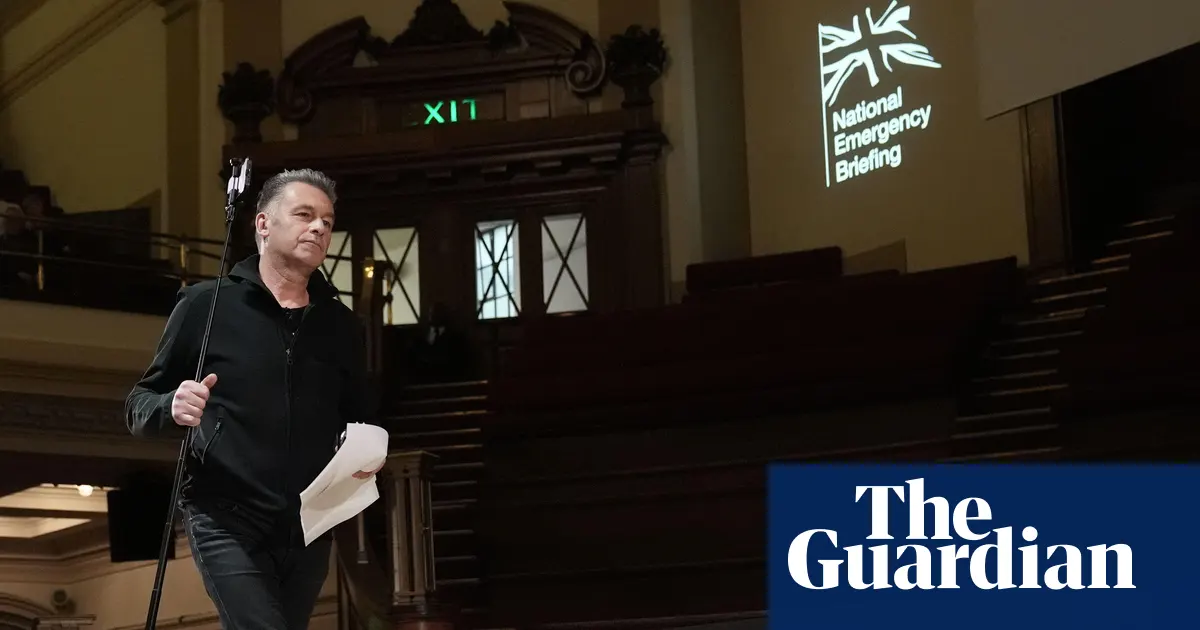
The British government must be honest about the scale of the threat posed by climate and nature breakdown, researchers have said, after nine out of 10 people surveyed after watching a briefing on the issue felt more motivated to act.
Last November, in the “first-of-its-kind national emergency briefing”, nine experts gave stark assessments in Westminster Hall in London of the scale of the changes needed in the UK to adapt to the rapidly changing climate and ecological landscape.
The team behind the event crowdfunded to produce the People’s Emergency Briefing, a film outlining the urgent threats that climate and nature breakdown pose to food security, the economy and public health.
The film, which has so far been viewed by an estimated 185,000 people at more than 3,400 screenings, calls on the government to stage a primetime, televised emergency briefing on the climate and nature crisis.
Of the 13,000 people surveyed, 87% said watching the film made them more motivated to act. Watching the film is associated with a “substantial shift” in environmental understanding and concern.
Furthermore, 89% of people said the government should respond to the crisis with emergency-level mobilisation, similar to the Covid-19 pandemic or the second world war.
Prof Mike Berners-Lee, the chair of the National Emergency Briefing, said the threat from Covid-19 was easy for the public to understand when they were trusted with the facts.
The team is calling for a similar united emergency response delivered by independent experts and fronted by the prime minister.
In addition, 93% of those surveyed said the public was not being fully informed about the climate crisis and nature loss.
The government has previously been accused of hiding the truth from the public after refusing to publish a report from UK intelligence officers warning of the catastrophic impacts on national security from the collapse of vital ecosystems around the world.
Prof Lorraine Whitmarsh, from the University of Bath who led the research, said while most people were aware of some of the risks associated with the climate crisis, the “second-order risks” around national security, food supplies and impacts on the NHS were not so obvious.
She said: “Once somebody has sat through the film, I think they understandably feel everybody should know about these risks as these are going to be things that impact everybody on a day-to-day level, and so they support that greater education of the public.”
The National Emergency Briefing team is calling on Andy Burnham to be honest about the scale of the threat posed by climate and nature breakdown. “In doing that, he will send out a message that he speaks the truth, however comfortable or uncomfortable,” said Berners-Lee.
John Swinney, the first minister of Scotland, recently attended a screening of the film at the Scottish parliament. The UK government did not respond to a request for comment on whether it will screen the film but said it “welcomes any campaign that keeps our action against climate change and nature loss in the public discussion”.