

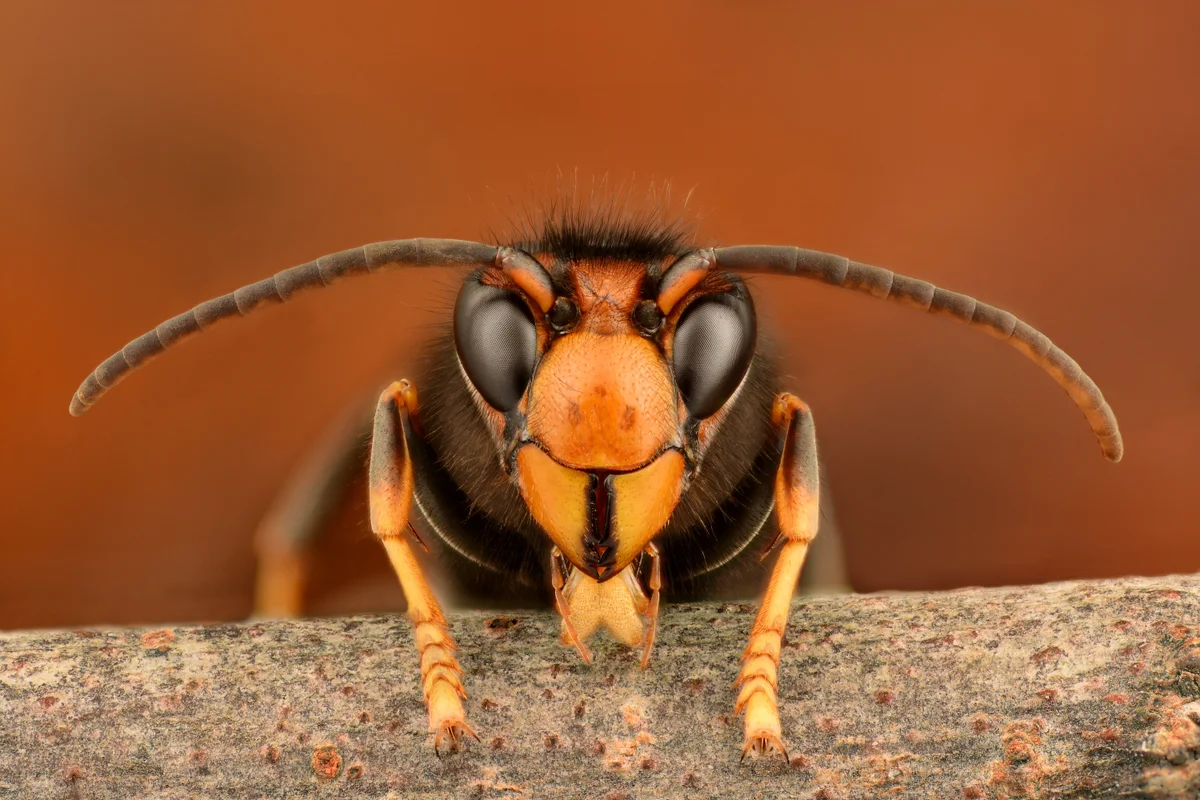
More than 800 Asian hornet nests have already been identified on Jersey this year, posing a serious public health risk
Asian hornets pose a growing public safety risk in Jersey, as officials warn that the number of potentially ‘life-threatening’ stings could soon rise.
The first Asian hornets in Jersey were reported in 2016. Since then, the island has been grappling with invasive species, which are ‘aggressive predators’ of native insects and a threat to vital pollinators like honeybees.
A sting from an Asian hornet will usually cause a red, swollen lump that may be itchy and painful. However, some people may experience an allergic reaction, which could be fatal.
During 2025, 50 sting incidents were reported on Jersey, including one confirmed anaphylactic reaction and a number of hospital attendances.
“Most incidents resulted from the accidental disturbance of nests rather than encounters with individual hornets away from a nest,” Mary Le Hegarat, Minister for Environment, Agriculture and Fisheries said at a States Assembly question on Tuesday.
“Officers are also aware of a number of near-miss events where members of the public, contractors or children narrowly avoided significant nest disturbance and potential injury”.
As of early October 2026, more than 800 nests have been identified on Jersey during the year – the majority of which have been destroyed. This represents a 50 per cent increase compared to the numbers of nests this time last year.
Around 1,000 nests are forecast for 2026, potentially going up to 2,000. This means more risk of serious sting incidents, including life-threatening incidents.
“While Asian Hornets remain a biological security issue, they are increasingly becoming a broader public safety and public service challenge, requiring a coordinated cross- government response,” Le Hegarat added.
Asian hornets have also been identified in the UK, with the first case confirmed in September 2016 near Tetbury in Gloucestershire. The nest was located and destroyed.
Due to monitoring and eradication efforts, Asian hornets are not yet established in the UK. However, there have been more than 120 sightings confirmed up to July 2024.
Asian hornets may look like wasps at first glance, but there are ways to differentiate the two species. Asian hornets have bodies that are generally dark in colour.
They have a bright yellow ‘belt’ and rears that are dark brown with a distinct yellow or mustard band. Hornets also have black heads with orange and yellow faces and a sleek shape similar to wasps.
Worker hornets measure up to 25mm in length, while Queens are slightly bigger (33 mm). They’re therefore smaller than the European Hornet but larger than the Common Wasp.
Asian hornet nests can be well camouflaged and difficult to spot, growing from the size of a tennis ball all the way up to the size of a football. If you spot a hornet nest do not disturb it. Inform the landowner if you are concerned about the risk to human health.
Join thought-provoking conversations, follow other Independent readers and see their replies