

It feels like the UK has a prime minister again. Not the Maybot paralysed with indecision. Not the clown-like Boris Johnson who crumbled under the weight of his own narcissism. Not the ridiculous Liz Truss. Not the steamrollered Rishi Sunak for whom everything was impossible. Not the automaton-like Keir Starmer who was never entirely sure what he wanted to do.
But a prime minister who is emotionally intelligent. Who understands the country and can connect with it. Who is prepared to expend political capital to get the things done that other politicians were too weak to go near. You can almost feel the sense of relief in a UK that has become almost accepting of decline and failure. It’s the return of hope over grievance. Where once more we have an adult prime minister prepared to speak to voters as fellow adults. It could catch on.
This was Andy Burnham’s first big set piece since taking office. And he went straight for social care. An issue that previous governments over the past 30 years have done their utmost to avoid. A Royal commission, 22 reviews and absolutely nothing has changed. Too difficult, too many hard choices. Far simpler to keep on with a system that’s failing. Let the next government deal with it. They can take the hits. Just concentrate on trying to win the next election.
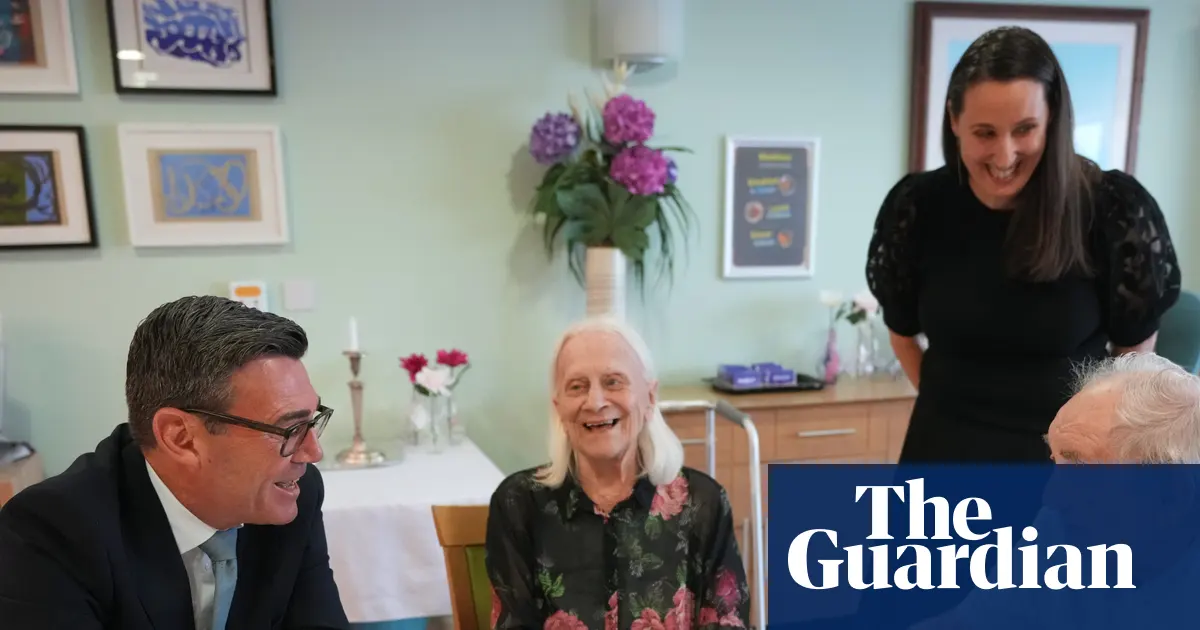
“This is personal to me,” said Andy, as he addressed a small audience of care workers and the media at Jewish Care in north London. Personal because his father has dementia and needs daily care.
It’s personal for a lot of us. It’s personal for me. My mother had Alzheimer’s and needed to be in a care home for seven years before she died last year. My sisters and I had to sell her home to pay for the care she got. We didn’t resent it. It was just what needed to happen and the care she got from a mostly overseas staff was superb. We couldn’t have asked for more. But my mother would have been bitterly upset had she been aware of what we had done. Before she got dementia she had always been so proud she would be able to leave her house to us children. It was to have been her last gift to us.
Here’s the thing. No one wants to pay for social care up until the point when you find you have no choice. It’s a lottery. Some people just drop dead of heart disease. Others die of cancer. By and large they have no need for a social care system. But then one day you find an elderly relative is beginning to behave differently. Their personality begins to change. They start forgetting things. You try to explain it away. Maybe they are anxious and depressed. The doctor puts them on anti-depressants. Old people’s memories do fail. It’s only months later you accept it’s dementia.
Then the choices become harder. You get in a carer to make daily visits to their home. To get them dressed. To make sure they are still eating. Then you up the care so there’s someone with them at night. Next there comes a time when the carers say your loved one’s needs have become too much for them to be looked after at home. And all the while you are having to make the financial calculation. How can I give them the best care when I have no idea how long they are going to live. When they might die within a year or live for seven. It’s a nightmare.
And Burnham gets that it’s a nightmare. That hard choices need to be made. No one wants to pay extra for social care, but how can it be fair that some families are left with next to nothing just because they can’t choose the manner of their own death? Here was Andy talking human. Talking unscripted from the heart. Accepting that some people will be cynical about his intentions as they’ve heard warm words that have come to nothing before. But putting his political career on the line. He had no idea how long the public would give him in Number 10, but he would make it his mission to reform the system.
First the good bits. The men and women – both paid and unpaid – who deliver quality care day in and day out. But there was so much that didn’t work. The 15-minute care packages. The emergency calls. The bed blocking. The care homes that profited from others’ misfortunes. The random nature of who could afford what level of care provision. A system that was ultimately unsustainable. Every bit as unfair as the US health system, where time and again it’s the vulnerable who are left to pick up the tab.
So there would be three changes. Bringing forward the review to be completed next year. Converging the social care and NHS workforce. And, most importantly, starting cross party talks. Kemi Badenoch and Ed Davey had written to Burnham at the weekend so he had invited them to be part of the consensus. Presumably Nigel Farage had not written, preferring to snipe from the sidelines about a death tax. One day he might discover that even Reform supporters may need social care at some point. There again, this was probably a politics that was a little too grown up for Nige.
Then we got to the questions. Here Burnham was also a revelation. Some media outlets have been moaning for the past week about how Andy was avoiding being interrogated. Running scared. Running a totalitarian socialist state. But he answered everything. No rambling. No answering questions he wished he had been asked. Just straightforward responses. Grown up to grown up.
Yes, it was going to be difficult. That’s why no one had tried to do it before. Yes, he did believe in consensus. Doing the big stuff involved dropping the political point scoring for the bigger picture. He hoped Ed and Kemi would be up to the challenge. He seemed to have given up on Nige already. And yes, though some of the costs could be met from efficiency savings, there would inevitably be some hard choices on tax to be made. Do you feel lucky that no one in your family will need social care? Maybe you do. But it’s coming for most of us.
Andy left with a smile. Maybe this had been the easy bit. Starting the ball rolling. But it was better than ignoring it. And what a relief to have someone in Number 10 who talks human. We should enjoy it while we can. Just think of the prize. If Andy were to do nothing in his time in office but fix social care, he would have achieved more than most other prime ministers.