

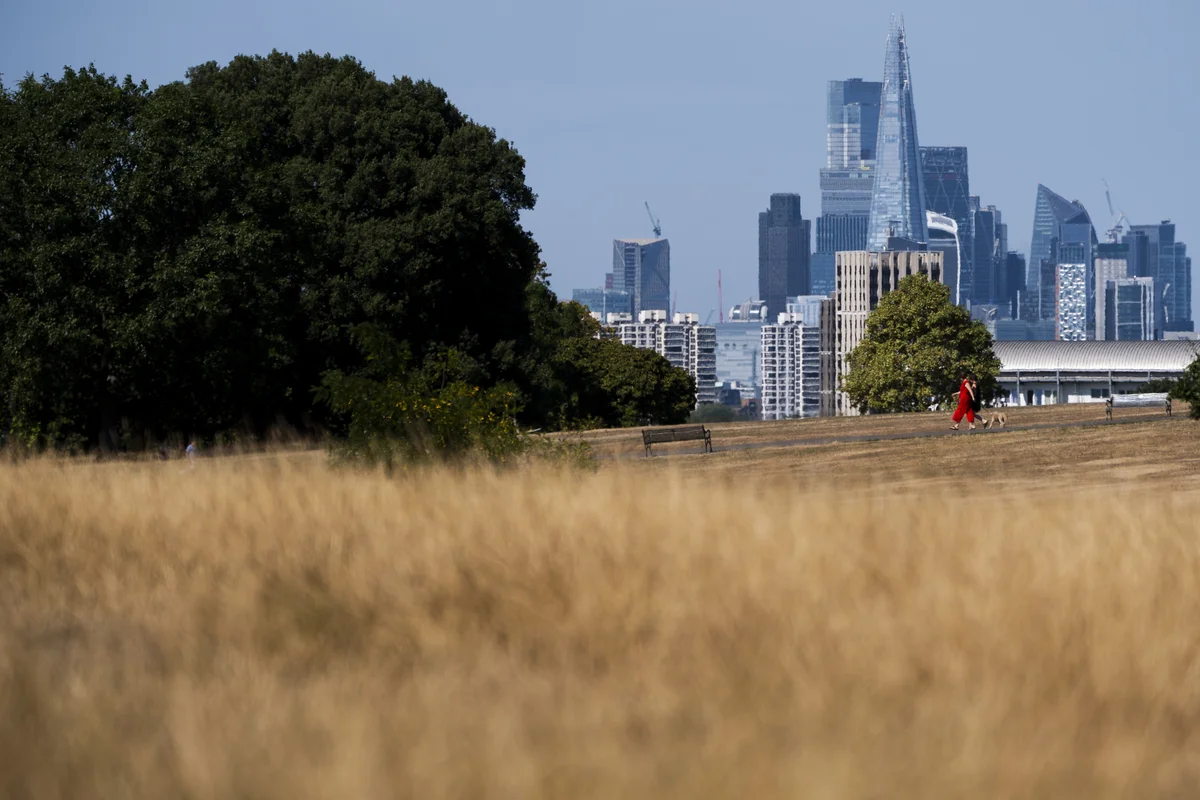
Southern Water pushes for rare drought order banning filling of non-domestic swimming pools
Prime minister Andy Burnham will chair a meeting of the government’s Cobra emergency committee this afternoon in response to the heat, the wildfires it has fuelled and the drought now covering much of the country.
It is the second Cobra meeting on the heat this year, after one held during the June heatwave.Temperatures are forecast to reach 33C today and up to 38C tomorrow.
A Downing Street spokesperson said the government understood that firefighters, farmers and NHS staff were all facing pressures connected to the weather.
Southern Water is pushing for a rare drought order which would ban the filling of non-domestic swimming pools.
The firm said an “exceptional” shortage of rain in the South East “demonstrates a clear threat to supplies” in Hampshire and the Isle of Wight. 165,000 people in the Southampton West supply area could “soon be significantly affected” by a restricted water supply, it added.
Thames Water said that thousands of homes and businesses have now been left without water or with low pressure after pipes burst in London and Essex.
Southern Water has applied for a rare non-domestic drought order which would ban businesses from non-essential water use, including cleaning cars and filling swimming pools, saying an “exceptional” lack of rain has threatened supplies in Hampshire and the Isle of Wight.
It warned that 165,000 people in the Southampton West supply area could face restricted supplies.
Environment Secretary Angela Eagle will decide on the application, which would be the first such ban since May 2006.
Firefighters raced to battle a major fire at a park in Exeter on Tuesday amid a worsening heatwave and drought conditions sweeping the country.
Smoke could been seen billowing over the city after a large fire broke out at in the Beacon Heath area.
Devon and Somerset fire and rescue service said a large grass fire had broken out at Mincinglake Valley Park just before 3pm and advised people to stay away.
The cause of the fire was not immediately clear. It comes as nearly three-quarters of England has been plunged into drought status following the driest July in 190 years.
Parts of the UK could be set to bake in 38C temperatures as a firefighters’ union chief warned the country faces a “national emergency” over wildfires.
Some areas face a fifth heatwave of the summer, as the Met Office revealed the UK is on course for its hottest summer on record.
Temperatures could hit 33C on Wednesday before potentially reaching highs of 37C or 38C on Thursday, the Met Office say.
Steve Wright, general secretary of the Fire Brigades Union, told Times Radio that the country faces a national emergency “right now”, with blazes seen “all across” the UK.
Firefighters have responded to 966 wildfires across England and Wales this year, including 185 in the first 10 days of August alone, while July was the busiest month on record for wildfires with 458 incidents, the National Fire Chiefs Council (NFCC) said.
Prime minister Andy Burnham will chair a meeting of the government’s Cobra emergency committee this afternoon in response to the heat, the wildfires it has fuelled and the drought now covering much of the country.
Ministers from the environment department, the Home Office and the health department will attend, along with the Environment Agency. It is the second Cobra meeting on the heat this year, after one held during the June heatwave.
Temperatures are forecast to reach 33C today and up to 38C tomorrow.
A Downing Street spokesperson said the government understood that firefighters, farmers and NHS staff were all facing pressures connected to the weather.
The hot and dry weather is expected to continue into Wednesday with nearly three-quarters of England and all of Wales now suffering from drought conditions.
Temperatures are expected to peak around 33C in the Midlands and the south-east ahead of highs of 38C on Thursday, as a fifth heatwave of the year puts the UK on track for its hottest ever summer.
Some 71.3 per cent of England has been plunged into drought after a record dry July and a very dry start to August, putting immense pressure on water resources for homes and the environment.
More than 45 million people are now living in areas under drought conditions as August begins with more dry weather and the fifth heatwave of the year.
More than two-thirds of England is affected, and the entirety of Wales. Only the northern-most regions are not been issued official drought status, but remain in the high-risk ‘prolonged dry weather’ category.
The National Drought Group says that most of the country (71.3 per cent) is now experiencing a ‘flash drought’, owing to the prolonged lack of rain paired with back-to-back heatwaves.
With heatwaves becoming hotter and more frequent, demand for air conditioning is expected to rise significantly. However, if the UK and similar countries respond to hotter summers simply by installing more AC, they risk creating a costly, energy-hungry and more unequal future. But there’s a cooler, smarter way forward.
Colleagues and I have surveyed more than 1,600 households across the UK and found that two-thirds used fans in the summer of 2022, and one in five used air conditioning. The vast majority of those AC units were bought during or after that year’s 40°C heatwave – showing how quickly habits can shift.
Half of England and parts of Wales are now subject to a hosepipe ban with almost three-quarters of the country plunged into drought.
Officials from the National Drought Group assessed on Monday that 71.3 per cent of the country is now in drought, with the addition of the East Midlands, Lincolnshire, Northamptonshire, Kent, East Sussex, Solent and the South Downs.
That brings the total number of people affected up to 45 million as a fifth heatwave of the summer sweeps through England and Wales.
You can read where the hosepipe bans are in effect below.
Join thought-provoking conversations, follow other Independent readers and see their replies