

Southern Water pushes for rare drought order banning filling of non-domestic swimming pools
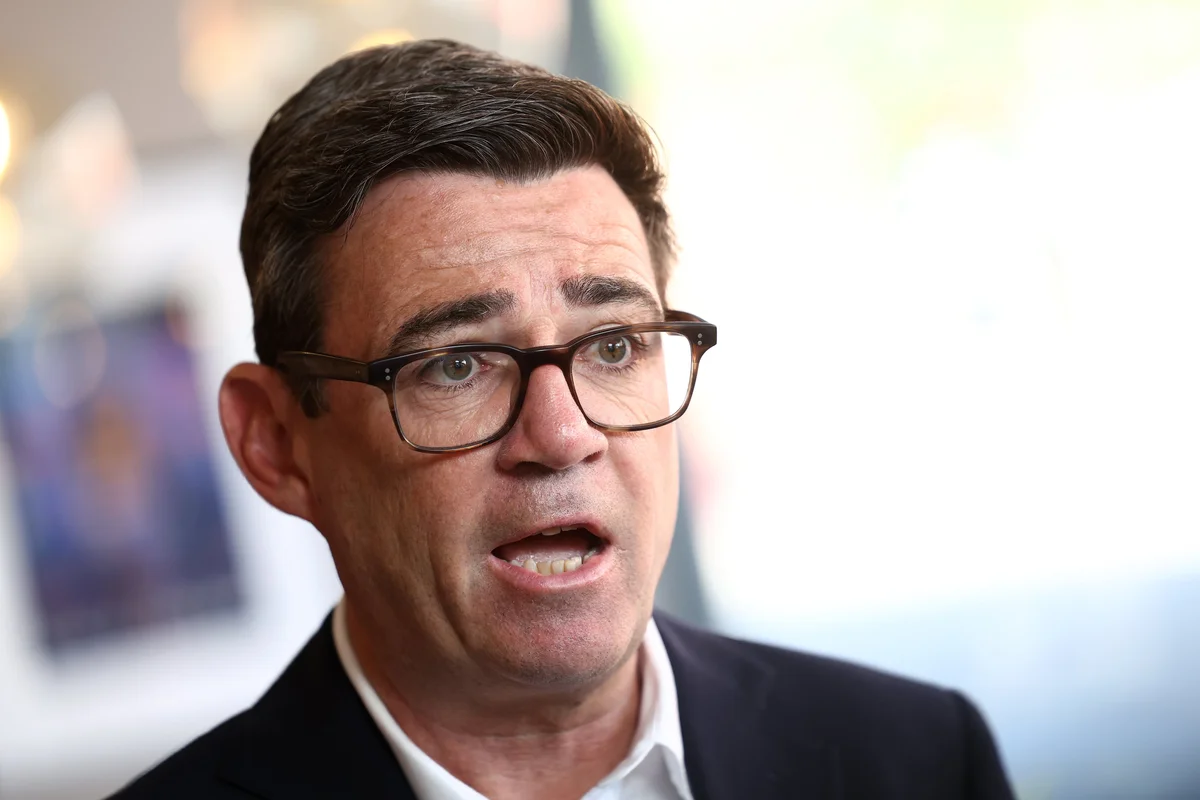
Prime minister Andy Burnham will chair a meeting of the government’s Cobra emergency committee this afternoon in response to the heat, the wildfires it has fuelled and the drought now covering much of the country.
It is the second Cobra meeting on the heat this year, after one held during the June heatwave. Temperatures are forecast to reach 33C today and up to 38C tomorrow.
A Downing Street spokesperson said the government understood that firefighters, farmers and NHS staff were all facing pressures connected to the weather.
On Tuesday a firefighter union chief warned the country faces a “national emergency” amid ongoing wildfires.
Southern Water is pushing for a rare drought order which would ban the filling of non-domestic swimming pools.
The firm said an “exceptional” shortage of rain in the South East “demonstrates a clear threat to supplies” in Hampshire and the Isle of Wight. 165,000 people in the Southampton West supply area could “soon be significantly affected” by a restricted water supply, it added.
Thames Water said that thousands of homes and businesses have now been left without water or with low pressure after pipes burst in London and Essex.
Steve Wright, general secretary of the Fire Brigades Union (FBU), warned the UK faces a national emergency “right now” with fires across the country.
Firefighters have responded to 966 wildfires across England and Wales this year, including 185 in the first 10 days of August alone, while July was the busiest month on record for wildfires with 458 incidents, the National Fire Chiefs Council (NFCC) said.
Crews from Hampshire and Isle of Wight Fire and Rescue Service have battled a fire in the New Forest, which started after a van caught fire on the A31 near Ringwood on Sunday.
The area hit by the blaze is protected heathland and home to a number of rare species, according to the New Forest National Park Authority.
Mr Wright told Times Radio: “In many parts of the country, firefighters do not have the new modern equipment to deal with these.
“They do not have the new modern personal protective equipment, the lightweight fire kit that we wear, the right helmets, lightweight helmets, breathable uniforms to make sure they’re better protected, their health is protected when they’re out dealing with these incidents for hours and hours on end.”
In response to Andy Burnham chairing a meeting of the government’s emergency Cobra committee following another heatwave, Robert Palmer – deputy director at Uplift – says new oil and gas drilling needs to stop.
“If his government is going to properly face up to the threat of climate change it must stop major new oil and gas drilling such as the Rosebank field.
“This decision is the first major climate test for the government. They are literally playing with people’s lives if they sanction more drilling which will wreck our planet and cause this dangerous heat.
“Climate Change is clearly devastating the UK, with nearly three-quarters of the country in drought, a fifth heatwave on the way in the south of England and severe health alerts. Heartbreakingly, this is after the sweltering heat has already killed thousands already this summer.
“It is also a horrific economic burden in terms of dealing with wildfires, ruined crops and fears that food bills are set to rocket.
“We need leaders that protect the public’s health, their need for lower bills and a safe climate ahead of oil company profits, and speed up the shift to clean energy to stop the heat once and for all.”
Today’s Cobra meeting is aimed at ensuring the UK’s “national resilience is one step ahead of the situation” and Britain’s “national infrastructure is able to cope”, a government minister has said.
Asked whether the Cobra meeting is coming too late, after a series of wildfires and drought across the country, immigration minister Anna Turley told Sky News: “No, we’ve kept the situation monitored closely throughout the summer, and I know that you know the cabinet have all been working closely on this.
“So it’s been really important that we maintain our pressure on this.”
She added: “But I think it’s right that the prime minister, has called a Cobra today because we need to make sure all of our national infrastructure is able to cope…
“We’ve been supporting farmers. We’ve been ensuring the railways are working smoothly.
“But the priority, as I said, to make sure now that with Cobra, we really make sure that our national resilience is really one step ahead of the situation.”
Provisional statistics from the Met Office show that the mean temperature for the summer so far, from 1 June, stands at 16.48C – which is 1.88C above the 1991 to 2020 average.
To equal the 16.12C in 2025, the UK’s warmest summer on record, the rest of August would only need to be 0.21C below the long-term average, and any warmer than this would establish a new record for the country, the Met Office said.
And for England and Wales, which have seen temperatures more than 2C above average so far this summer, it is even more likely that June to August 2026 will be record-breaking.
And in a summer that has been marked by extreme weather, temperatures are to spike again this week.
Temperatures could hit 33C on Wednesday before potentially reaching highs of 37C or 38C on Thursday, the Met Office say.
Met Office chief forecaster Chris Bulmer said: “While the peak heat will be more short-lived than recent heatwaves, temperatures widely into the mid-30s Celsius on Thursday brings the potential for impacts for some, which is why a Met Office warning has been issued.
“High pressure is now becoming dominant and temperatures will build day by day. Southerly and south-easterly winds will also tap into the hot conditions over Europe which helps develop this further notable heat in what has been a hot and dry summer so far for many in the south of the UK.”
Months of heat have left soil so dry and compacted that it will struggle to absorb rain when it returns, raising the risk of flash flooding within days of the drought breaking, researchers have warned.
“We can move from drought conditions to flooding in a very short space of time,” said Jeff Da Costa, a researcher in hydrometeorological hazards at the University of Reading. “Flood preparedness needs to be ongoing because the risk is very real, even during a drought.”
Rain returning will not end the drought either, he said. River levels recover relatively quickly while groundwater, reservoirs and soils take far longer, meaning the landscape can look green again and rivers can rise while serious water deficits remain underneath.
Yanchen Zheng, a senior research associate in hydrological modelling at the University of Bristol, also said hot weather drives water demand up at exactly the point when rivers and aquifers are lowest, and that recovery can take months or years. Current models tend to overestimate how much water is left in rivers, she said, a problem most acute in south-east England, which is densely populated, depends heavily on groundwater and is already short of water.
Southern Water has applied for a rare non-domestic drought order which would ban businesses from non-essential water use, including cleaning cars and filling swimming pools, saying an “exceptional” lack of rain has threatened supplies in Hampshire and the Isle of Wight.
It warned that 165,000 people in the Southampton West supply area could face restricted supplies.
Environment Secretary Angela Eagle will decide on the application, which would be the first such ban since May 2006.
Firefighters raced to battle a major fire at a park in Exeter on Tuesday amid a worsening heatwave and drought conditions sweeping the country.
Smoke could been seen billowing over the city after a large fire broke out at in the Beacon Heath area.
Devon and Somerset fire and rescue service said a large grass fire had broken out at Mincinglake Valley Park just before 3pm and advised people to stay away.
The cause of the fire was not immediately clear. It comes as nearly three-quarters of England has been plunged into drought status following the driest July in 190 years.
Parts of the UK could be set to bake in 38C temperatures as a firefighters’ union chief warned the country faces a “national emergency” over wildfires.
Some areas face a fifth heatwave of the summer, as the Met Office revealed the UK is on course for its hottest summer on record.
Temperatures could hit 33C on Wednesday before potentially reaching highs of 37C or 38C on Thursday, the Met Office say.
Steve Wright, general secretary of the Fire Brigades Union, told Times Radio that the country faces a national emergency “right now”, with blazes seen “all across” the UK.
Firefighters have responded to 966 wildfires across England and Wales this year, including 185 in the first 10 days of August alone, while July was the busiest month on record for wildfires with 458 incidents, the National Fire Chiefs Council (NFCC) said.
Prime minister Andy Burnham will chair a meeting of the government’s Cobra emergency committee this afternoon in response to the heat, the wildfires it has fuelled and the drought now covering much of the country.
Ministers from the environment department, the Home Office and the health department will attend, along with the Environment Agency. It is the second Cobra meeting on the heat this year, after one held during the June heatwave.
Temperatures are forecast to reach 33C today and up to 38C tomorrow.
A Downing Street spokesperson said the government understood that firefighters, farmers and NHS staff were all facing pressures connected to the weather.
Join thought-provoking conversations, follow other Independent readers and see their replies