

Residents affected by wildfires say they were left “angry and upset” after a mural of Prime Minister Andy Burnham was painted on a blackened mountainside above their homes.
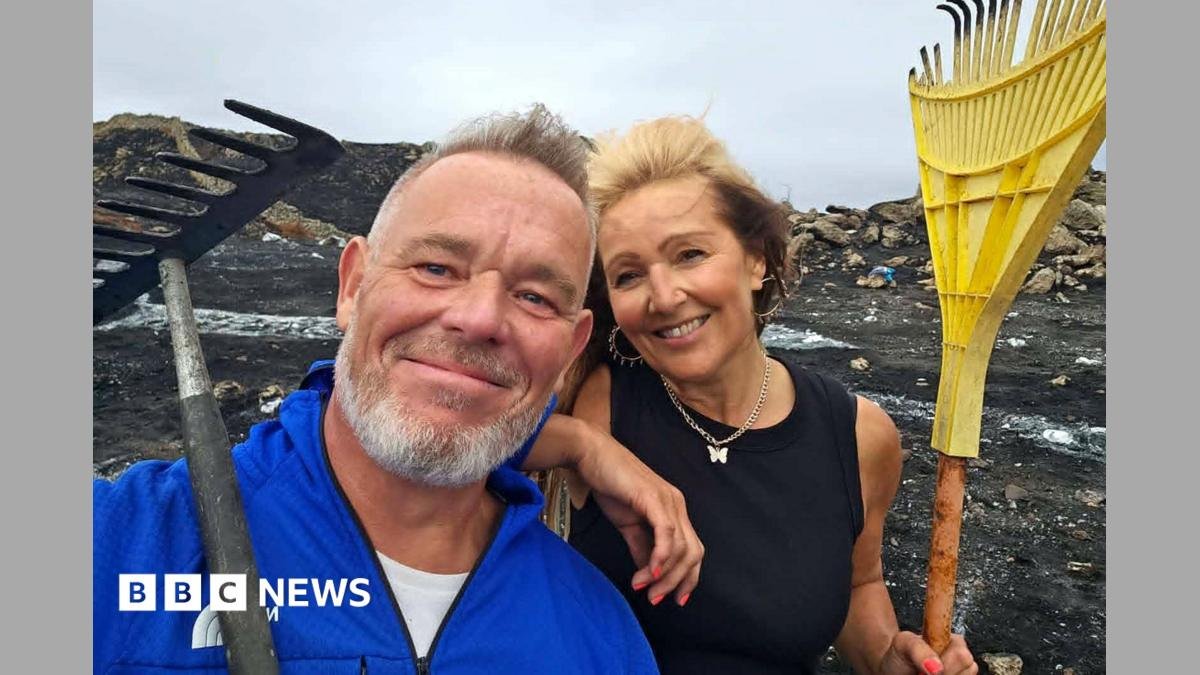
Dubbing it an “intrusion into grief” two walkers removed Greenpeace’s work with rakes.
The campaign group’s 1,120-sq-m anti-oil and drilling image showed Burnham holding an oil drum and the words: “Our house is on fire Andy.”
Greenpeace said the work, in Capelulo, Conwy, had not been meant to upset people but to “draw attention to the escalating climate crisis”.
In July about 200 acres of land was affected by wildfires with North Wales Fire and Rescue Service declaring it a major incident.
The blaze came within yards of destroying properties – with 36 homes evacuated.
Hairdresser Allie Evans was among those who had to leave.
When pictures of Greenpeace’s mural emerged on Monday she went up the mountain to see it.
The 53-year-old said: “I can’t remember having been so angry and upset all at once.
“It was so disrespectful to the landscapes. It was also an intrusion into local grief, which is how we felt when we came back home to see the mountain so utterly changed.
“It added insult to injury. I couldn’t understand how an organisation that wants to protect the environment, can graffiti the earth and stain rocks which are millions of years old.”
A banner would have delivered Greenpeace’s message just as easily, without affecting the environment, Evans said.
She and Rhos-on-Sea resident, Dean Ward, went to remove the paint.
Evans said: “We were concerned a lot of people would want to go up the mountain to see the graffiti, and the hillside would get trashed.”
She said Greenpeace had painted over rocks and soil, staining them.
“Had we not done anything, it would have been there for a long time,” Evans said.
The pair had broken up the paint and raked flakes into the soil, but Evans said some parts were “baked” so it had been difficult to do so.
“So you can still see stripes on the site, if not the overall graffiti.”
Ward told Greenpeace online he had taken “great pleasure” in removing its work, adding: “Thought Greenpeace was all about leave no trace and you do this to the mountain side.”
Bangor Conwy Môn Senedd member, Janet Finch-Saunders, accused the group of “environmental vandalism”, saying burnt hillsides should not be used “as a canvas for political protest”.
Greenpeace UK’s co-executive director, Areeba Hamid, said: “Our artwork was not intended to disturb [people’s] grief but to draw attention to the escalating climate crisis that’s putting these beautiful places and communities at risk.
“We took great care to minimise our impact on the land. The artwork was temporary by design: created with a water-based paint often used on sports turf and safe for grass, plants and soil.
“It was applied to an area where the fire had already burned away all living vegetation, leaving just rocks and ash.”
The threat, Hamid said, had not been “a dab of water-based paint” but “extreme weather driven by fossil fuels”.
She added: “We wanted to challenge the system that caused this damage and send a vital message to the prime minister: the science shows that more oil and gas drilling means more communities left to cope with the devastation brought by heat, droughts and wildfires.”
Tinder conman who pretended to be multi-millionaire cancer patient stole £68K
‘Frustrated’ teen drove at 140mph on way to gym before crashing into taxi
Rare Suffragette Christmas card from 1910 found at roadshow