

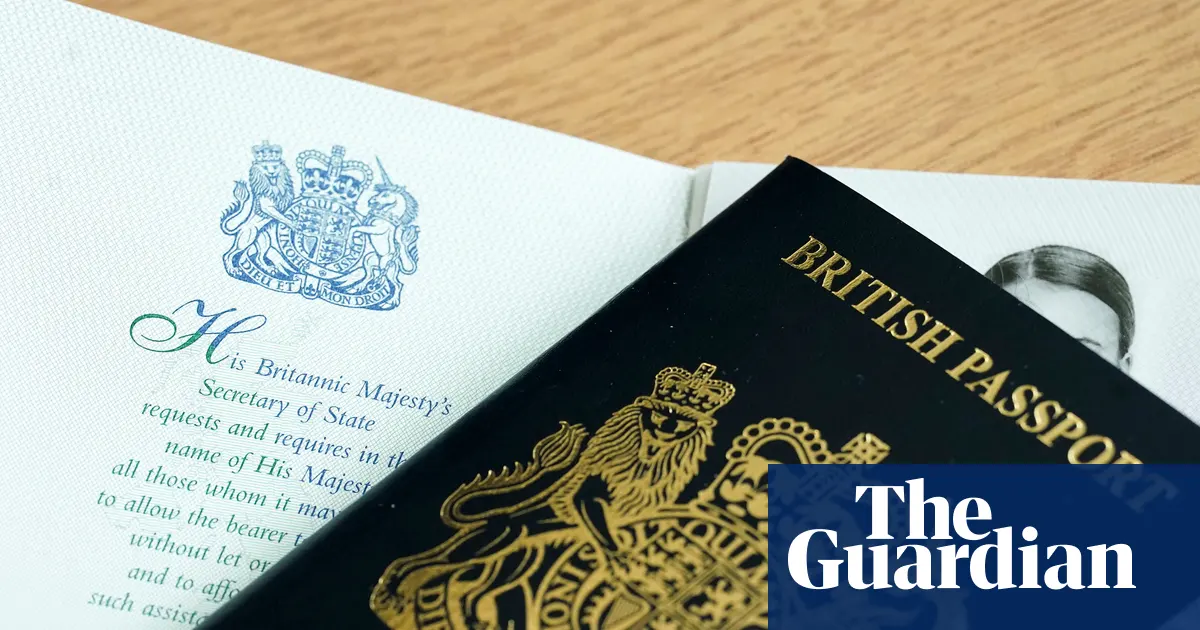
My teenage daughter is unable to see her grandparents because of the UK’s new requirement for dual nationals to hold a UK passport.
I’m a UK citizen, married to a French national, and we live in France. Our two older children have both French and UK passports. Our third child was born while we were living in Zimbabwe and only has a French passport.
I began her application for a British passport in February. I had to submit photos of my wife when pregnant, family photos from the birth to the present day, hospital records and official translations of French marriage and birth certificates.
During an official interview I was asked about my job, commute and the layout of my house, but very little about my relationship with my daughter.
I was then told that there was insufficient evidence to prove my paternity and was invited to consider a DNA test, which will cost £600 and take yet more time.
We need to visit my elderly father who is unwell in the UK but cannot risk it in case our daughter is denied boarding.
Your daughter is a victim of new rules that came into force in February and effectively deny entry to the UK to dual national Britons who do not have a British passport.
Foreign nationals can enter freely on passports issued by their country of residence, but expats cannot unless they stump up £589 for a certificate of entitlement. The law has caused chaos, with children being stranded abroad or arbitrarily denied a passport granted to their siblings.
Since the UK government is not accepting that your daughter is a UK national, you asked if she could travel on her French passport. No one could answer the question.
As a result, you face Christmas apart from your parents. Home Office rules state that officials must consider a passport application on the “balance of probability” if an applicant refuses a DNA test. They must also explain why an application is refused. You have never been told why your copious proofs of paternity have been deemed inadequate.
The Home Office will not comment on individual cases, but it did tell me that additional evidence, such as the layout of a home, may be requested to add “credible authenticity”.
Soon afterwards, you were informed that the application had been accepted after all, despite no new paperwork having been sought since April. I can only assume that press scrutiny prompted the realisation that your domestic floorplan is credibly authentic.
We welcome letters but cannot answer individually. Email us at consumer.champions@theguardian.com or write to Consumer Champions, Money, the Guardian, 90 York Way, London N1 9GU. Please include a daytime phone number. Submission and publication of all letters is subject to our terms and conditions.