

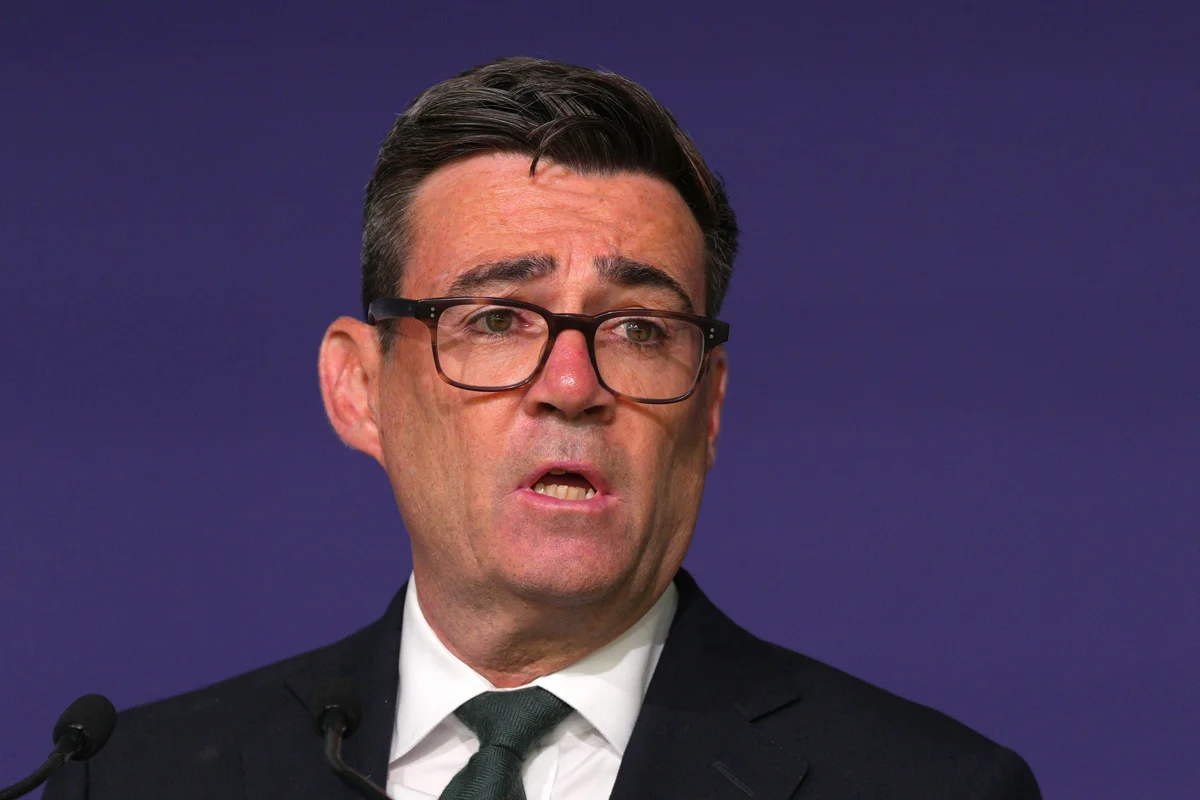
The prime minister has promised to be ‘bolder’ than his predecessor in taking the UK back to the heart of Europe but Downing Street refused to provide a ‘running commentary’ on discussions
Andy Burnham has committed to Keir Starmer’s much criticised Brexit red lines in a major blow to hopes that he would find a route back into the bloc.
In an interview last year when he was still mayor of Greater Manchester, Mr Burnham said he wanted the UK to rejoin the EU and there were serious hopes he would tear up Labour’s manifesto commitments not to rejoin the EU, the single market or customs union when he took over from Sir Keir Starmer as prime minister in July.
This was further fuelled when his new minister for Brexit, Hamish Falconer, refused to rule out rejoining at some point. The economic problems caused by Brexit were recently highlighted by former prime minister Sir John Major in an interview with The Independent where he warned Brexit is costing the UK £100bn in trade a year and £40bn in tax revenues.
But a Downing Street spokesperson insisted on Monday that the red lines are still in place despite Mr Burnham making it clear that he wants to be “bolder” than his predecessor in taking the UK back to the heart of Europe.
The spokesperson said: “We remain committed to the red lines set out in the manifesto. We’re not rejoining European Union, and there will be no return to the customs union, the single market, or freedom of movement.”
The comments came after the prime minister signalled that he intends to go further than Sir Keir while on a trip to Ukraine, his first foreign visit since becoming PM.
He suggested Britain plans to take a “bolder” approach towards forging closer relations with the EU. Later, Downing Street declined to expand on what being “bolder” would mean, with a spokeswoman saying they would not provide a “running commentary” on negotiations with the bloc.
Speaking to the president of the European Council Antonio Costa during an overnight train journey to Kyiv, Ukraine, on Sunday, the prime minister emphasised that “greater co-operation” was required across all sectors.
A Downing Street spokesperson said: “The prime minister met the president of the European Council Antonio Costa on the train to Kyiv last night, as the two leaders travelled into the city to mark Independence Day.
“It was a vital moment to show unity and solidarity with Ukraine, the leaders agreed.
“Turning to the UK’s relationship with the European Union, the two leaders underlined the importance of being ambitious to drive a step change in relations.
“The UK had to be bolder in terms of getting closer to the bloc, the prime minister said.
“That included building on the close defence and security ties already forged between the UK and European allies to drive greater cooperation across all areas of the relationship, he added.”
The comments come ahead of an upcoming UK-EU summit where issues such as youth mobility, defence, energy sharing and other deals will be up for grabs.
Initially scheduled for July, the meeting has been postponed to a yet-to-be-confirmed date later this year.
During the same journey to Kyiv, Mr Burnham spoke to the prime minister of Luxembourg, Luc Frieden.
A Downing Street spokesperson said: “The prime minister set out his ambitions for the UK to get closer to the European Union, and both agreed on the important cultural and educational ties between the UK and Europe to deliver opportunity for the next generation of Brits and Europeans.”
Mr Burnham looks set to continue a policy started off by his predecessor Sir Keir Starmer of closer relations with the EU.
It echoes comments he wrote in the Times newspaper before he became Prime Minister, where he said: “I want to consolidate the progress made on the existing UK-EU negotiations and make further progress quickly, including by strengthening our co-operation on illegal migration, economic security and the broader resilience of our societies to external threats – from terrorism to AI-driven disinformation.”
During his campaign to win the heavily-Brexit voting Makerfield constituency in the by-election, Mr Burnham had said he was not in favour of the UK rejoining the EU, warning it could be a “permanent rut” of Brexit arguments.
He had previously said he wanted to see the UK back in the EU within his lifetime.
However during the contest, he said: “My view is that Brexit has been damaging, but I also believe the last thing we should do right now is re-run those arguments. Britain will be stuck in a permanent rut if we’re just constantly arguing and people are pulling away from each other.
“It is time, surely, isn’t it, to bring people back together, to focus on what we’ve got in common, to get the growth coming to all places, so it’s felt there.
“That is what we need in this moment and it’s really important that whatever comes out of this by-election there is a more unifying feeling about the change that we need to work towards.”
Economically, forging closer ties with Europe could provide a £92bn GDP boost to the UK, according to new economic research.
Commissioned by Best for Britain, which campaigns for full UK-EU reintegration, the research undertaken by Frontier Economics suggests at least 90 per cent of Brexit’s economic hit could be recouped by the UK rejoining the EU.
Last week, a a former Tory minister turned Labour adviser claimed taking Britain back into the EU single market would win Burnham the next general election.
Nick Boles, who served as a minister in David Cameron’s government before quitting the Conservatives in 2019 over the party’s Brexit stance, added that it would help Burnham achieve a legacy to rival Tony Blair’s.
Mr Boles has urged the new prime minister to seize the opportunity created by “pretty scary” world events since 2016 to strike a deal with European Union leaders that would protect the continent and offer the UK a much-needed economic boost.
Join thought-provoking conversations, follow other Independent readers and see their replies