

Millions more could face hosepipe ban as further regions expected to enter drought, expert says
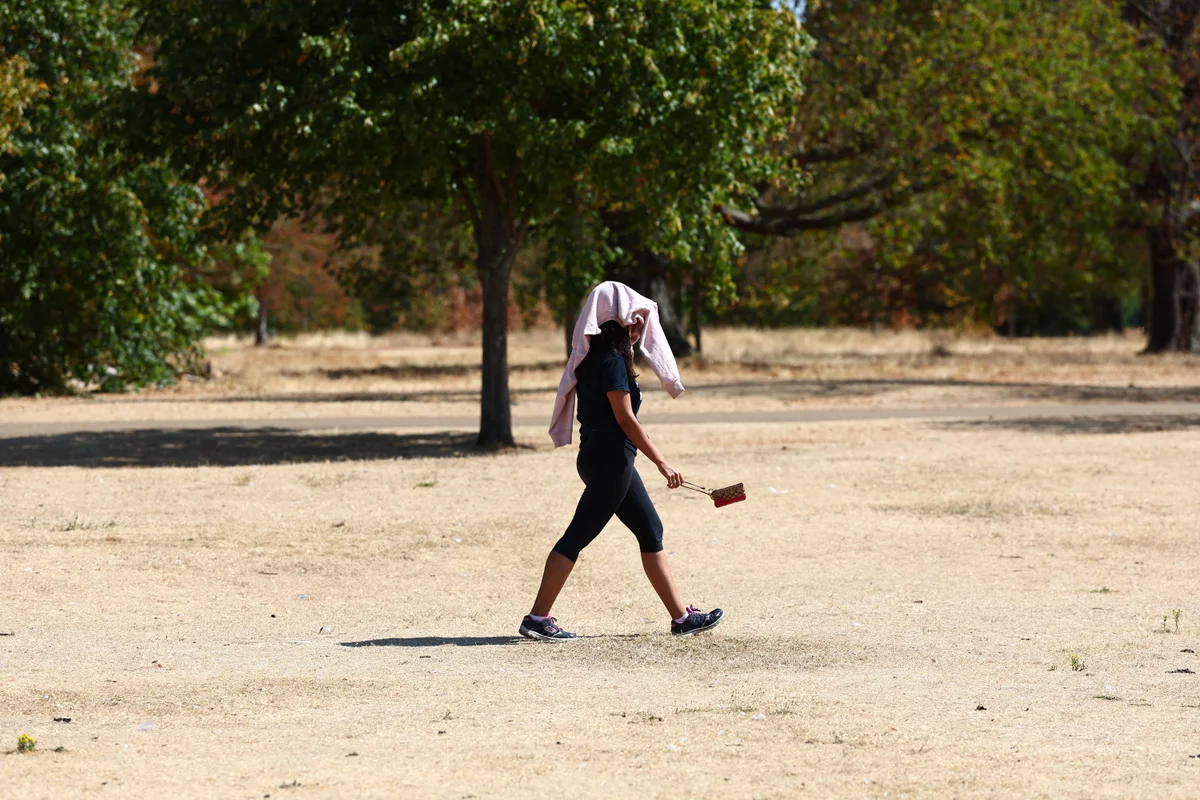
More parts of England could be plunged into drought as a fifth heatwave of the year is expected to arrive this week.
Officials at the National Drought Group will meet on Monday to decide whether more regions could fall into drought conditions after half of England and all of Wales reached the criteria in July.
Drought was declared across East Anglia, Hertfordshire and London, Thames Valley, Hampshire and the Isle of Wight, Devon and Cornwall, the west Midlands, and Wessex on 29 July as the chair of the National Drought Group, Helen Wakeham, warned of long-lasting impacts on the environment, wildlife, and the economy.
The hot and dry conditions show no sign of abating across England and Wales as the Met Office has predicted temperatures could peak at 36C across East Anglia and the south east of England this week, with temperatures above 30 expected as far north as Newcastle-upon-Tyne.
“A second consecutive summer drought is an exceptionally serious situation and one that will have long-lasting impacts on our environment, wildlife, and the economy,” Ms Wakeham said. “We want everyone to stay safe and hydrated during the hot weather but every drop we can save is a drop more for nature and agriculture.”
Liz Bentley, chief executive of the Royal Meteorological Society, has warned that the number of people under a hosepipe ban is expected to increase.
She told BBC Radio 4’s Today programme that she expected north-west England, already classed as under a “prolonged dry weather” status, would be among those areas where drought could be declared on Monday.
Millions of customers for Thames Water and South East Water are currently under hosepipe bans and more than 25 million people across the country have restricted water use, the Environment Agency has said.
It comes as the country has experienced a record-breaking summer, with two record-breaking heatwaves in May and June that led to more than 2,800 excess deaths. Two more heatwaves in July, the driest July in England and Wales since records began in 1836, have fuelled drought and wildfires.
While parts of the south east of England have seen very little rain this summer, Scotland and Northern Ireland are expected to see spells of rain over the week ahead after a weekend of heavy rainfall.
Meanwhile, fire services in Suffolk have been working since the evening of 29 July to put out a wildfire in nature reserve Dunwich Heath which led to the evacuation of hundreds of holidaymakers along the coast.
Firefighters have warned people to avoid the incident area weeks on as active firefighting and hotspotting operations continue despite no smoke. Temperatures below the surface are believed to be as high as 600C in some areas where roots, peat, stumps and other organic material continue to burn underground.
At the fire’s peak, 150 hectares of the rare nature reserve was scorched and experts from the National Trust and RSPB have estimated it could take decades for the wildlife to recover.
Join thought-provoking conversations, follow other Independent readers and see their replies