

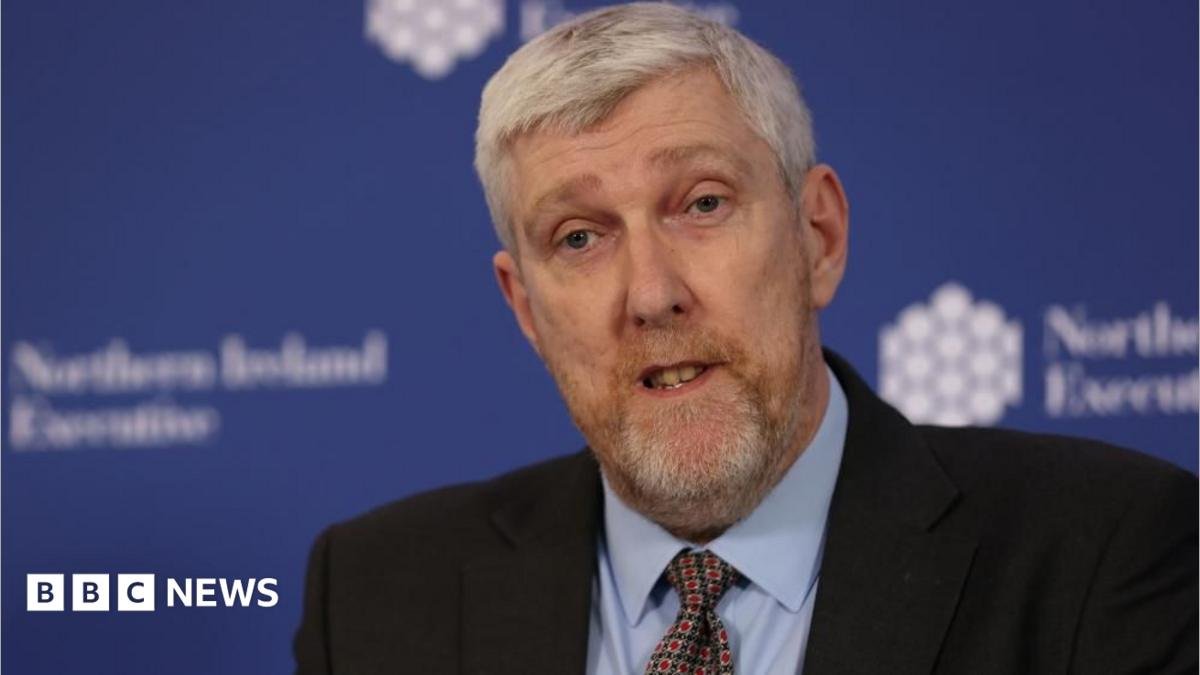
Economics and business editor, BBC News NIPublished11 August 2026, 00:04 BSTUpdated 1 minute agoFinance Minister John O’Dowd has defended the controversial £39m economic growth fund saying the money will go into “job creation”.
The Local Growth Fund (LGF) is a UK government scheme which replaces money which previously came to Northern Ireland from the EU.
The government has changed the focus of the fund away from the day-to-day operations of voluntary groups and towards infrastructure spending.
O’Dowd said Stormont will be putting “£30 million” into “job creation, infrastructure and broader infrastructure”.
However, the Northern Ireland Council for Voluntary Action (Nicva) said the LGF is leading to significant redundancies across the sector.
Speaking on Wednesday, O’Dowd said the executive has put a “package together in communication and conjunction with the British Government”.
“We need to move forward from there,” he said.
Health Minister Mike Nesbitt said the executive “made the best of an imperfect job” and that O’Dowd “done a decent job with the parameters which he was placed in”.
The LGF consists of almost £12m in day-to-day spending and £27.4m for infrastructure or capital projects.
That £27.4m is being spent via Stormont departments, with the biggest allocation of £13m going to the Department for the Economy.
Economy Minister Caoimhe Archibald said it would be used for projects that target innovation, business start-ups and social enterprises.
That includes £7.1m for Invest NI to help businesses with innovation projects and to undertake early-stage design work for its Mandeville industrial estate in Craigavon.
£7m to the Department for Communities for projects including town centre renewal and regenerating vacant properties
£3.8m to the Department of Agriculture to support innovation and sustainability in agriculture
£3.2m to the Department for Infrastructure for investment in transport and connectivity improvements
Finance Minister John O’Dowd said the money would deliver “tangible benefits” but that “the entire handling by the British government on this fund put us in a position which was far from ideal”.
He said he would continue to argue that in future “priorities should be determined by locally elected ministers, not Westminster”.
East Londonderry assembly member Claire Sugden said while the capital investment was welcome, it did not replace the funding community organisations have lost.
“Resource funding pays the staff who support vulnerable people, run employability programmes, tackle isolation and help families through difficult circumstances,” she said.
“Without it, services may be reduced, experienced staff could be lost and people will have fewer places to turn for help.”
‘Anxiety and upset’ over funding cliff-edge this week
Sectors facing funding cuts are ‘life saving’ for young people