

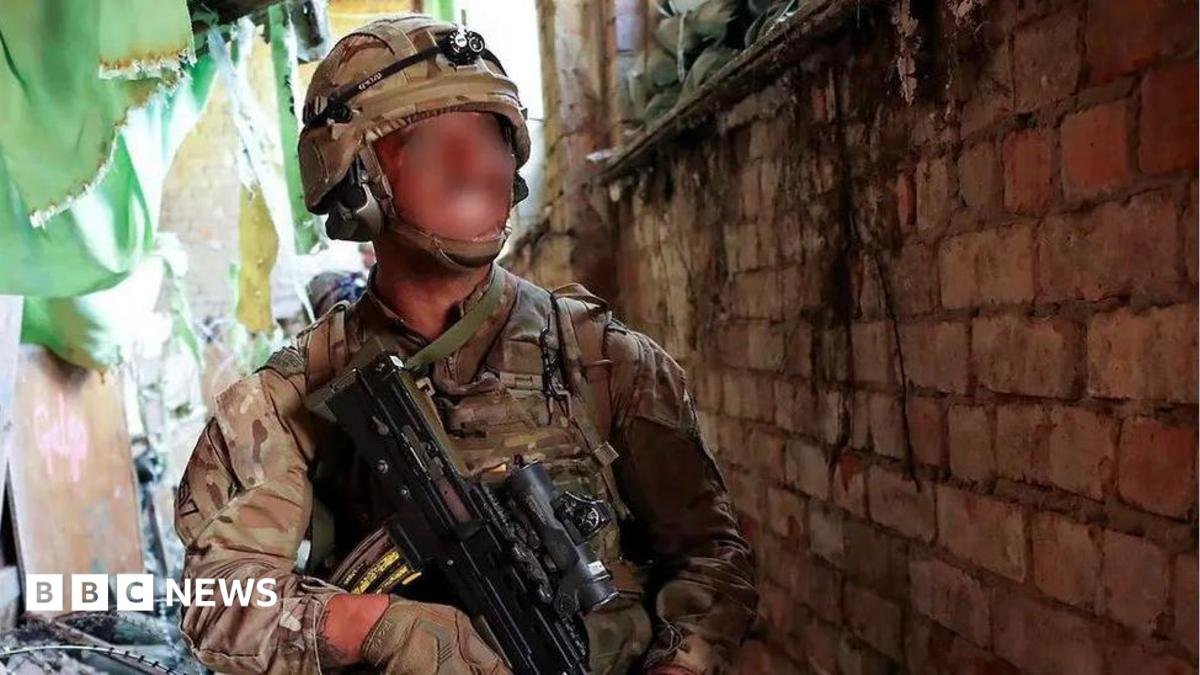
A group of 256 Royal Marines and soldiers, who claimed the Ministry of Defence (MoD) had “knowingly” exposed them to asbestos, have settled out of court for an undisclosed sum.
Court proceedings were issued against the MoD in February 2024 by the group, from Plymouth and Scotland, claiming their employer had breached the Human Rights Act.
The potential exposure was said to have taken place in Latvia in 2018 and 2019 over two exercises, with a sample collected by a marine at the time found to contain asbestos.
The MoD, which did not accept liability, said action had been taken to “prevent similar issues arising in the future” and further use of the non-MoD training site had been prohibited.
An MoD spokesperson added: “Our people make extraordinary sacrifices to keep our country safe, often operating in challenging environments around the world, and their health, safety and wellbeing will always be our highest priority.”
Former Plymouth Royal Marine Edward Hill, who first logged the case in 2019, said while he was disappointed there had been “no accountability” the group were overall “happy with the settlement”.
“We now have to live our lives not knowing whether we’re going to contract an asbestos-related illness,” he said.
Another former Royal Marine previously told the BBC it felt like someone had “potentially handed me an unnecessary death sentence”.
The claim for compensation related to two exercises, Saber Strike 18 (SS18) and Baltic Protector 19 (BP19), which took place in the Latvian base called Skrunda-1 in 2018 and 2019.
It involved former and serving marines from Plymouth’s 30 Commando, Arbroath’s 45 Commando and attached Army soldiers.
Hill, who was on BP19 with 30 Commando, expressed concern over the dust in a disused building at Skrunda-1 they were being asked to sleep in.
He asked a superior if the group could sleep outside in a tent instead but was refused due to safety concerns and claims they were later told to lay down boards to stop the dust from being disturbed.
Hill then took it upon himself to collect a 2kg (4lb) sample from where they slept.
The firm which tested the sample told the BBC it contained Chrysotile fibre, a white loose asbestos usually found in pipe insulation or corrugated roofs.
Part of the group’s claim was the MoD knew asbestos was present at Skrunda-1 before both exercises but troops were not briefed accordingly.
An MoD inquiry into the potential exposure found no evidence the marines and soldiers had been given a health and protection brief informing them of the asbestos hazard before, during or immediately after deployment.
It noted that exercise planners were aware of the asbestos presence.
However, questions were not asked about the state of the asbestos or to verify the host nation’s claim buildings identified as safe from asbestos were indeed safe.
The panel said the “asbestos risk associated with Skrunda-1 had not been correctly identified” and concluded there had been “insufficient reconnaissance and an assumption of safety”.
A report dated 4 June 2018, as SS18 in Skrunda-1 began, identified the presence of asbestos at the site.
A second military plan from April 2019 also stated, in bold, that asbestos was in the buildings – 12 weeks before BP19 arrived.
The MoD said: “Action has been taken following a service inquiry into the circumstances surrounding this potential exposure to prevent similar issues arising in the future, and Army use of the Skrunda-1 site is prohibited.”
A BBC investigation revealed Canadian experts found loose asbestos in Skrunda-1 after Latvian claims it had been removed.
The testing in June 2022 reportedly found Chrysotile asbestos in 10% of its samples – the same type of loose asbestos fibre claimed to be in the sample collected by Hill.
The Canadian Department for Defense banned its troops from working there in 2018.
While the MoD is subject to the Health and Safety at Work Act in Great Britain, it is exempt from criminal prosecution because of Crown privilege., external
The Health and Safety at Work Act does not apply to the MoD in its work overseas.
The MoD said it applied UK health and safety standards so far as practicable overseas, where local standards fall below UK requirements.
Hill, who served for 15 years in the Royal Marines and is now an independent councillor, said he wanted a change to the law.
“I’d like the law to change so that the Health and Safety Executive (HSE) has jurisdiction over the health and safety of UK service personnel wherever they serve in the world,” he said.
The settlement allows a return for further damages should any of those in the claim go on to develop asbestos-related diseases.
The group said it previously asked that 70 unidentified personnel, who were also in Skrunda-1, be informed of the possible exposure. They claim the MoD rejected the request.
A second claim from a further 55 service personnel relating to the two Latvian exercises is ongoing. It is understood they were identified too late to join the existing claim.
In response to the service inquiry’s recommendations, it is understood the MoD has updated its policy on managing asbestos.
Asbestos is made up of microscopic fibres. When disturbed, it can be inhaled which can cause serious diseases and cancer, like diffuse mesothelioma.
Veterans diagnosed with diffuse mesothelioma have a choice of a lump sum compensation of £185,000, which was increased in April from £140,000, or a monthly payment.
Since 2016, the government has paid military veterans diagnosed with mesothelioma more than £125m in lump sum compensation. £13.4m of that was paid in the last tax year.
It is thought, due to short life expectancy, that many veterans opt for the lump sum.
Royal Marines to fight MoD in asbestos court claim
Asbestos ‘found after removal’ in Latvia army site
Related internet linksService Inquiry into the alleged exposure of UK Defence Personnel to asbestos during overseas exercises and training since 2018