

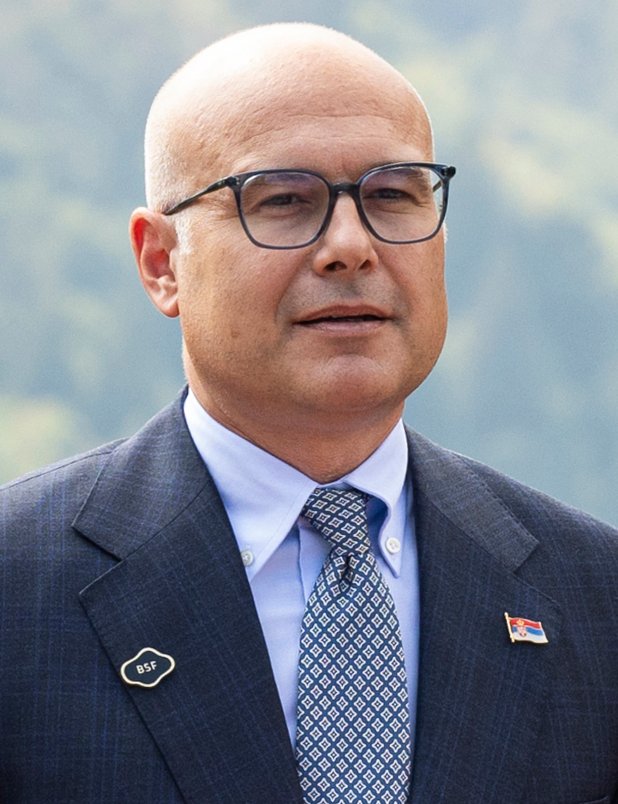
- Serbian Prime Minister Milos Vucevic has resigned following nationwide protests triggered by a railway station canopy collapse.
- The protests, led by students, have resulted in a government reshuffle and the resignation of former Transport Minister Goran Vesic.
- President Aleksandar Vucic has met protesters’ demands for transparency and is considering successors for the Prime Minister role.
- The resignation could lead to parliamentary elections if a new Prime Minister is not appointed within 30 days.
In a surprising turn of events, Serbian Prime Minister Milos Vucevic has stepped down from his position, following a series of nationwide protests sparked by the tragic collapse of a railway station canopy in Novi Sad. The incident, which occurred in November, claimed the lives of 15 people and has since ignited a wave of public outrage demanding accountability and protesting against corruption.
Vucevic, who held the office for less than a year, stated that his decision to resign was made to avoid further complicating things and to not further raise tensions in society. His resignation comes amidst a period of heightened civil unrest, with tens of thousands of citizens regularly taking to the streets in protest.
The collapse of the railway station canopy in Novi Sad, a city in Serbia, has been a catalyst for the ongoing protests. The incident has led to charges against more than a dozen people, including former Transport Minister Goran Vesic, who resigned in the aftermath of the tragedy.
The Protests and Government Response
The protests have been largely led by students, who have been blockading universities and halting traffic on a daily basis for months. In response to a call for a general strike, many Serbians abstained from work last Friday. In December, an estimated 100,000 people attended a demonstration in Belgrade, with numerous smaller protests taking place across the country.
Tensions escalated on Monday when supporters of the governing Progressive Party attacked and injured a female student during a 24-hour blockade of the busiest road junction in the capital, Belgrade. In response to this incident, President Aleksandar Vucic announced a major government reshuffle, stating that he expected more than half of the ministers to be replaced.
In a televised address on Tuesday, President Vucic condemned the attackers, stating, We cannot accept that after calling for dialogue and complete peace, anyone in our name violates that. The guys who did that did enormous damage to the state, the party, and each of us. He also announced that he would pardon students and university tutors who faced charges in connection with the protests.
The Aftermath and Future Implications
The president further stated that he and the government had met the student protesters’ demands for transparency about the reconstruction of the Novi Sad railway station. He also revealed that he was considering three or four names to succeed Vucevic as Prime Minister, but remained open to other suggestions.
Vucevic, who is also the leader of the governing Serbian Progressive Party, had previously served as the Minister of Defence and was the Mayor of Novi Sad during the early stages of the railway station’s reconstruction project. He stated that Novi Sad Mayor Milan Djuric would also resign, fulfilling the most political of the demands of some of the most extreme protesters.
The question now is whether these departures will be enough to appease the mostly young people who have been staging regular and increasingly elaborate demonstrations. Vucevic expressed hope that his decision to resign would encourage protesters to calm down the passions and return to dialogue.
However, the resignation could also pave the way for parliamentary elections if a new prime minister is not appointed within 30 days of the National Assembly confirming the resignation. President Vucic has also been pushing the idea of an advisory referendum on his own role, stating that he would stand down if he lost that vote.
Despite the ongoing protests, a change in power currently seems unlikely. The ruling Serbian Progressive Party is well-organised and dominates Serbia’s media space. It comfortably won the most recent parliamentary elections just over a year ago. In contrast, the opposition remains fractured and without many allies in the media.
The reaction of the protesters may be crucial to what happens next. If enough of them view the prime minister’s resignation as a significant development, then the recent run of demonstrations may fizzle out in a similar fashion to a number of previous anti-government movements. If they decide to carry on protesting, the turbulence in Serbia may be set to continue.
Historically, mass protests have led to significant political changes. For instance, the 2011 Arab Spring, a series of anti-government protests, uprisings, and armed rebellions that spread across much of the Arab world, led to the fall of several governments. Similarly, the 1989 protests in Eastern Europe led to the end of communist rule in several countries. Whether the current protests in Serbia will lead to a similar outcome remains to be seen.