

It’s hard to avoid overly commercialised markets full of generic imported tat, but these six festive villages are recommended for their Christmassy atmosphere
Few things capture the essence of the cold winter season quite like a traditional Christmas market glowing beneath a canopy of twinkling lights, filled with tempting aromas of sweet, hot gluhwein and sizzling bratwursts.
While it is increasingly difficult to steer clear of overly commercialised events packed with generic imported items, six festive villages across England, the north of Ireland and Europe come highly recommended. Each offers an authentic Christmassy atmosphere alongside genuine local stallholders selling handcrafted gifts and delicious traditional winter fare.
To help visitors avoid tourist traps, Maren Schullerus, a travel expert at GetYourGuide, offers advice, saying: “When it comes to souvenir buying, there’s a few indicators that the person has made it themselves, as opposed to it being shipped from a factory.
“Three tips: Look for stalls that won’t let you photograph their crafts, look for tradespeople that can tell you how they made it, and make sure you’re allowed to pick it up and have a look before you buy it.”
Dates: November 20 to 6 January – even on Christmas Day
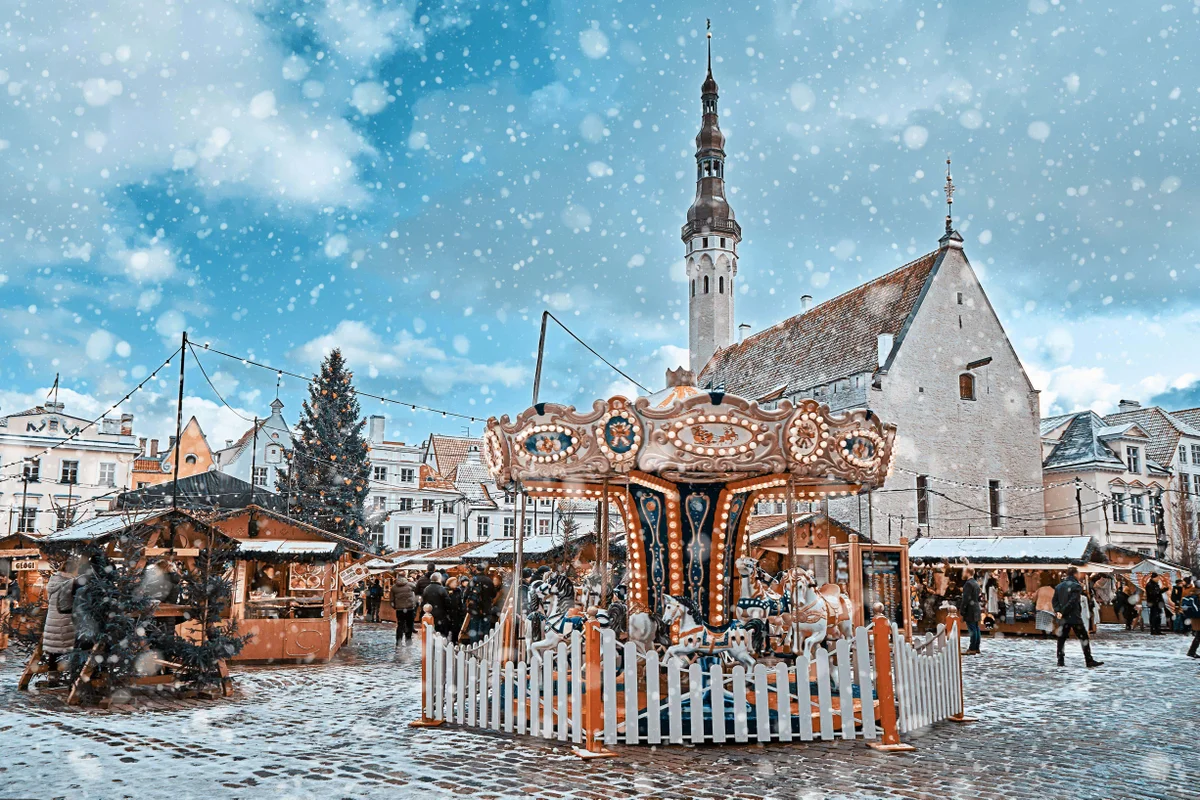
If Father Christmas ever visited a Christmas market, it would be this one, which is probably why he flies in daily on his reindeer-drawn sleigh to fairytale world at the heart of Tallinn’s beautiful UNESCO World Heritage Old Town.
With its cobblestoned streets and medieval architecture, this is about Christmassy as you can get this side of the North Pole.
Tallinn has been putting up a magnificent fir tree in front of the town hall since 1441 – which makes it the first place in Europe to have a public Christmas tree.
Stalls sell locally made linen textiles, felt wool goods, knits and wooden craft, as well as Estonian delicacies such as blood sausages, sauerkraut and gingerbread.
Warm up on hot glogg (hot spiced wine spiked with liquor) made from local buckthorn berries before whizzing around on the old-fashioned carousel or the ice-skating rink. The market is open every day from 10-8pm, while hot drinks are served until 10pm, and later at the weekend.
Come for the Christmas market, but also stay for this Gothic city’s cosy cafés, museums and public saunas – and winter swimming if you’re brave enough.
Best for: Regional and international food
The lively and friendly city of Belfast in Northern Ireland is one of the easiest and often cheapest Christmas-market breaks you can do.
Set against the grand backdrop of Belfast City Hall, a village of traditional German chalets under a twinkling canopy of fairy lights offer quality Christmas fare and handcrafted gifts alongside an impressive line-up of food stalls selling exotic meat burgers, Dutch pancakes, mugs of gluhwein, Italian chocolates and speciality cheeses.
The market closes at 8pm Monday to Wednesday, but the stalls and beer tents stay open later from Thursday onwards for weekend crowds. And there’s a magical vintage fairground and Santa’s Grotto for the children.
Local travel expert Rory King, founder of Rory’s Travel Club, says, “One of the best things is the mix of local and international food. Rather than sitting down for one big meal, I’d share a few things and try as much as possible. My favourite pick is the crumble stall where you DIY your own crumble and custard dessert!
“Local traders make up over half of the stalls, so you can pick up an authentic souvenir. It’s very busy in the evenings and Saturdays, so I’d go during the day for the food and shopping, then come back later for a drink and to see City Hall lit up.”
“Give yourself at least one night in Belfast – spend a couple of hours at the Christmas market, but also visit Cathedral Quarter and St George’s Market.”
Dates: 13 November to 1 January (both open on 25 December)
The best bit about choosing Budapest for a festive mini break is you get two for the price of one – Advent Basilica on St Stephen’s Square and Vorosmarty Square Christmas market, as well as all the smaller markets scattered around the city.
While prices at all Christmas markets get hoiked for tourists, Budapest is a remarkably budget-friendly destination – the price of a mulled wine is half what you’d pay in Austria or Germany.
The city transforms into a winter wonderland when the facade of the basilica is illuminated in the nightly light show, lighting up the ice rink and Hungarian artisans in the stalls below selling their ceramics, jewellery and leatherwork.
Just a 10-minute walk from the Basilica, the city’s oldest and most traditional Christmas market sits in the heart of Pest. In the brightly lit square, you can watch live music, buy local crafts, and taste festive Hungarian delicacies like kurtoskalacs (chimney cake) and Kolbasz sausages. The market also features a beautiful nativity display and a grand, towering fir tree.
The city is famous for its thermal spas, especially the historic Rudas on the banks of the Danube River, which offers stunning views over the city from your warm, mineral bath – especially if it snows.
With a medieval atmosphere that rivals Prague, Chester’s ancient walls, imposing Gothic cathedral and two-tiered black and white timber-framed buildings are the setting for perhaps the prettiest of England’s Christmas markets.
A brilliantly lit Christmas tree is the centrepiece in the festive market’s twinkly traditional wooden chalets where local North West-based traders sell perfect stocking fillers from local cheeses, handmade fudge and gin, to silver jewellery, candles and handmade soaps.
While Chester Christmas market in the town square is smaller compared to the others, visitors can also shop in the historic covered shopping galleries ‘The Rows’, which is packed with independent boutiques.
Open seven days a week until 6.30pm Sunday to Wednesday, and until 8pm Thursday to Saturday, visitors can feast on traditional hog roasts, real ales and hot mugs of gluhwein while the spectacle of The Winter Watch Parade, a historic revival of medieval and Renaissance characters, Roman soldiers and fire-breathers process through the streets.
For a final touch of festive magic, visitors can head to Chester Castle for medieval-themed seasonal events of live traditional music and a special appearance by St Nicholas.
Best for: A quick hop across the Channel
Dates: 18 November to 30 December (closed 25 December)
You can board a train at breakfast and be drinking spiced mulled wine with a lunch of cheesy tartiflette and chocolate waffles when you visit Lille Christmas market.
Just one hour and 22 minutes on the Eurostar from London St Pancras, Lille station is just a 10-minute walk from the market which makes it convenient for a day trip.
The birthplace of French statesman Charles de Gaulle, Lille is the old historical capital of Flanders, and the festive seasonal lighting brings out the best in its Flemish-baroque architecture.
For over 30 years, the Christmas market has been set in the heart of Lille, where chalets selling regional produce, crafts, vintage toys, decorations and candles are all overlooked by a giant Christmas tree and Ferris wheel.
During the week the market runs until 8.30pm, and stays open till 10pm at the weekend, but once you’re shopped out, the town is a mecca for those with a sweet tooth. Stop for coffee and its famed sweet desserts in one of the many charming historic patisseries and boulangeries that line the narrow, cobbled streets.
Now in its 20th year, the biggest selling point of Winchester Cathedral Christmas market is the beautiful backdrop of the Cathedral’s historic Close where pretty wooden chalets and strings of festive lighting, the sound of Christmas carols and the aroma of mulled wine make it a magical setting for a day out.
It offers handcrafted gifts, artisan food and festive treats from the cathedral’s carefully hand-selected traders.
It used to boast an ice skating rink, which sadly has not come back since the pandemic but a food court now serves up pretty good seasonal fare.
Like all markets it gets very busy at weekends, so it’s worth getting a train if you don’t mind walking down from the station. It’s best to visit during the week, although the market does close at 6pm compared to 8pm at weekends.
As the first ancient capital of England, Winchester itself is definitely worth exploring, and if you can time your visit to attend one of the Christmas cathedral services and listen to the world-famous choir, then you’re in for a heavenly treat.
Join thought-provoking conversations, follow other Independent readers and see their replies