

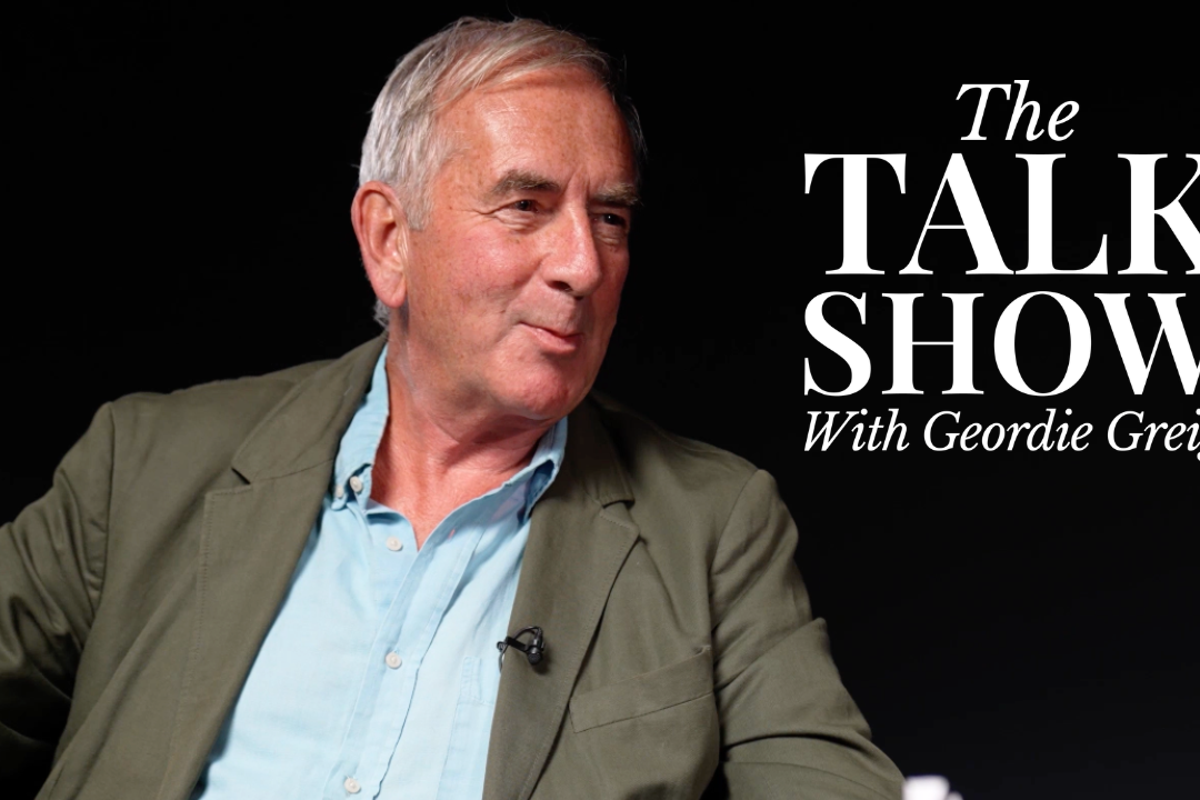
Robert Harris tells The Independent editor-in-chief Geordie Greig that the Labour prime minister’s ‘desire to be liked’ risks making him look ‘facile and glib’
Andy Burnham has been accused of being “prolier-than-thou” by using his working class roots to win votes.
Political novelist Robert Harris, a lifelong Labour supporter, has told The Independent he deplores attempts by the prime minister to appear more ‘proletarian’ than he is.
Harris called it a “prolier-than-thou” attitude – political slang based on the phrase ‘holier-than-thou’ – a hypocrite who claims they are more authentically working class than others.
Since entering No 10, Burnham has talked often of his background as a working class Catholic Northerner and feeling “an imposter” at Cambridge University as a result.
Harris, brought up in a council house and who also studied at Cambridge, said he “hated” it when politicians like Burnham “turn on the system that created them” and claimed to have had an “awful” background.
Labour statesmen of the past like 1960s Home Secretary Roy Jenkins had far more genuinely poor origins but never used it to boost their popularity, said Harris.
He also argued Burnham’s “desire to be liked” risked making him look “facile and glib” and forecast public “disillusion” in him could set in soon.
In an in-depth interview with The Independent editor-in-chief Geordie Greig for Independent TV, Harris spoke for the first time of his “painful” rift with Britain’s former ambassador to the US Peter Mandelson after he was forced to resign over the Jeffrey Epstein scandal.
Watch Geordie Greig’s full interview with author Robert Harris below
He reveals that he and Lord Mandelson, godfather to one of Harris’ children, had had no contact of any kind since shocking details of Mandelson’s links to paedophile Epstein emerged earlier this year.
The fact that neither had reached out to the other “speaks volumes”, says Harris.
He discloses a hilarious ‘Fawlty Towers’ style ‘don’t mention the war’ incident at dinner with Tony Blair and wife Cherie at No 10 when Harris fell out with Blair over the 2003 Iraq War.
Harris tips home secretary Shabana Mahmood to become Labour’s first female prime minister – and suggests Burnham’s surprise choice of “malleable” John Healey as chancellor may have been because “formidable” Mahmood intimidates him.
Harris, author of Fatherland, and Conclave, was speaking in the run up to the publication later this month of his latest novel, Agrippa, about the right hand man to Roman Emperor Augustus.
Explaining why he objects to the way he says Burnham and Starmer have played up their working class beginnings Harris says: “Andy Burnham (has) talked about… (he was) very prolier-than-thou about his Labour roots – like Keir Starmer going on about his toolmaker father and all of this rather desperate stuff.”
British statesman Roy Jenkins, former Labour minister who served as president of the European Commission, was born to a miner father who was jailed for his political views – but Jenkins never tried to capitalise on it, states Harris.
He adds: “I went to Cambridge from a comprehensive school. The system worked for me as it did for Burnham. I hate Labour politicians turning on the very system that’s created them.
Harris fears Burnham’s administration will “soon run into problems”.
“He is a deft politician. I think he’ll ride the waves very skilfully. Whether he will be able to tackle the fundamental problems in the country, I don’t know.
“As so often, his weaknesses and strengths are often just the same trait. He has a desire to be liked, knows how to make people like him and knows how to communicate with people.
“At the same time this can make him look rather glib, facile, and willing to bend… he’ll say something to get out of trouble in a tight spot, and then won’t be able to follow through. So there will be a process of disillusion – it seems hard to think that there wouldn’t be.”
Burnham’s rates cut for pubs was an attempt to woo Labour voters who had defected to Reform, led by beer drinking Nigel Farage, argues Harris, but it was “old fashioned” to see pubs as working class.
“One of the great things about Blair was I thought he had taken class out of politics. I mean, he was a public schoolboy leading (the Labour Party).”
Harris hesitates, clearly troubled, when asked if he has been in touch with Mandelson.
“It’s a very painful subject, personal subject,” he says.
“I haven’t spoken to him. He hasn’t called me or got in touch since he was sacked as ambassador. So that’s where we stand. I haven’t got in touch with him. He hasn’t got in touch with me. I can’t say any more than that. I think that merely that speaks volumes.”
Pressed further he says: “I don’t want to add to his troubles. People watching or reading this can guess the state of play.”
It sounds as though the friendship is broken for ever.
Reflecting on the wider aspect of the Mandelson-Epstein scandal, Harris says he hates seeing politicians “hunted down by the mob” – just as they were in the time of Agrippa in Rome.
But it also illustrates what motivated him as an author: “It shows you why it’s so interesting to write about power… this combination of morality, law, power, personal weakness, personal strength, the drama of it.”
Harris says Starmer’s downfall was caused by his weakness and because he lacked “the ferocity of convictions” that a leader like Margaret Thatcher had, or the ability ‘to see something through once he’d settled on it.
“He buckled again and again. The problem for Starmer was purely personality, I don’t think he could get on terms with a lot of his Cabinet.”
Harris sees parallels between the Roman Empire, the frequent subject of his novels, and modern politics.
So called “strong man” leaders such as Trump and Putin were like Emperor Augustus, “essentially dictators” who used power to make themselves rich.
In a more benign fashion, Harris says there was “definitely something of the Agrippa-Augustus relationship” to the alliance between Blair and his Chancellor, and later successor as PM, Gordon Brown.
Brown was “blunt, direct, brooding” – like Agrippa: Blair was “the charming, younger, slighter, front man” – like Augustus.
Harris concedes he had such a “close liaison” with Blair when Labour came to power in 1997 he was effectively part of ‘Team Blair’ – for a while.
He and wife Gill Hornby, also a novelist, were early guests at Chequers, the prime minister’s official country residence in Buckinghamshire, and he and Blair “got on well”.
But he and Blair became “too close” says Harris, recalling how their friendship ended in acrimony over the Iraq War, which Harris strongly opposed.
After early foreign policy successes, Blair foolishly “thought he could walk on water”, says Harris. After Harris made his views clear, Blair tried to patch things up, inviting Harris and his wife to another private dinner with him and Cherie, this time at No 10. Blair appealed to him: “Come on, we, we should get together.”
But the dinner backfired. Harris says: “It was clear that this gamble (the Iraq War) was failing badly.”
To his surprise the war was raised not by Blair but by Cherie, who announced France’s President Jacques Chirac “had behaved appallingly because he’d opposed the war”.
Blair tried to stop her. “Tony said, ‘Now, don’t let’s get onto the war’. You know, it was like- Don’t…”
I completed the sentence for Harris: “… don’t mention the war?” – as in the famous Fawlty Towers TV series where hotel owner Basil Fawlty (John Cleese) tries – and fails – not to mention the war to a German guest.
Harris laughs: “Yes, it was a touch of Fawlty Towers.”
It led Harris to re-assess Cherie Blair’s political leanings: “She’d always been painted as the leftier of the two, (but she) actually had called round Labour MPs to urge them to support the war.
The ‘froideur’ with Blair continued, but the episode had the benefit of inspiring one of Harris’ most successful novels, The Ghost – more than loosely based on Blair and the Iraq War – and a movie version starring Pierce Brosnan and Ewan McGregor.
It is about a British ex prime minister mired in scandal over a controversial foreign policy collaboration with America. Blair himself was far from pleased.
“He said to my publisher, ‘the next time Robert writes a book tell him to make it up, find his own character’.”’
“It was quite funny because… her role, the ex-Prime Minister’s wife, was played by Olivia Williams. She saw Olivia at some reception and said, ‘Oh, I’ve seen you playing me in the film’.
“Olivia said, ‘I hope it wasn’t too upsetting.’ She said, ‘No, I got to sleep with Pierce Brosnan and Ewan McGregor!’”
While he is lukewarm about Burnham, Harris glows with admiration for home secretary Shabana Mahmood, whom he has met.
“She is blunt, plain speaking, clever, charismatic, talked like a human being, very much what Tony was like at the beginning.
“And she’s got a lot of courage, as Tony had. I wouldn’t be surprised if she doesn’t end up as Labour’s first female leader.”
Mahmood is “head and shoulders above” most of the rest of the Cabinet.
Harris, who remains well connected in Labour circles, observes mischievously: “I heard that Burnham backed off making her Chancellor because she’s too formidable, she wouldn’t be pushed around. He’s got a more malleable figure (as Chancellor) in John Healey.”
Harris is proud of the fact that he has never once voted Conservative and claims the Party could be out of power for decades because of Boris Johnson.
“He could have ruined it (the Tory Party) for a generation. Once you start throwing away the rules and adopt a Trumpian approach to morality and lying then something goes out of politics.”
One of themes in Agrippa is how the huge power of Roman leaders could turn them into monsters.
“If you want to look at power, really you can do little better than to go to the Roman world because it’s all stripped down and simple.”
The personal consequences of winning and losing power in modern British politics are less violent, but not so different in essence according to Harris.
“You have to take decisions quite ruthlessly. You have to often drop old colleagues, old friends. Look at the bloodletting that’s in the Cabinet just lately with Burnham coming in.
“A lot of people will feel that Burnham is a monster, just as a lot of people thought that Starmer was when he fired so many.
“It is a very difficult thing to become a successful politician and not turn into a monster. Harold Wilson (Labour Prime Minister in the 1960s and 1970s) said the trick was to learn to take criticism, harden yourself, absorb it or ignore it, but not to become a monster.
Join thought-provoking conversations, follow other Independent readers and see their replies